




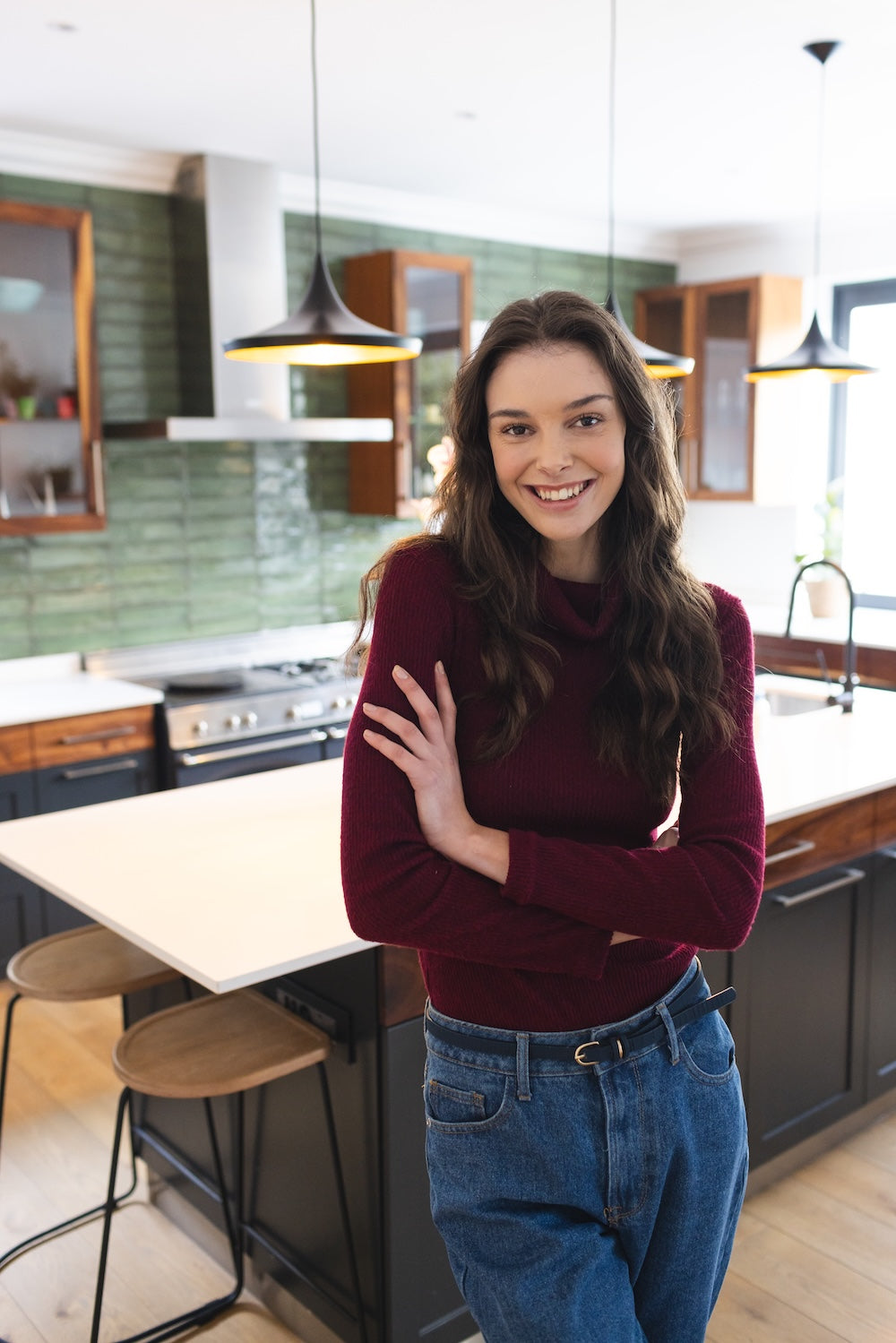
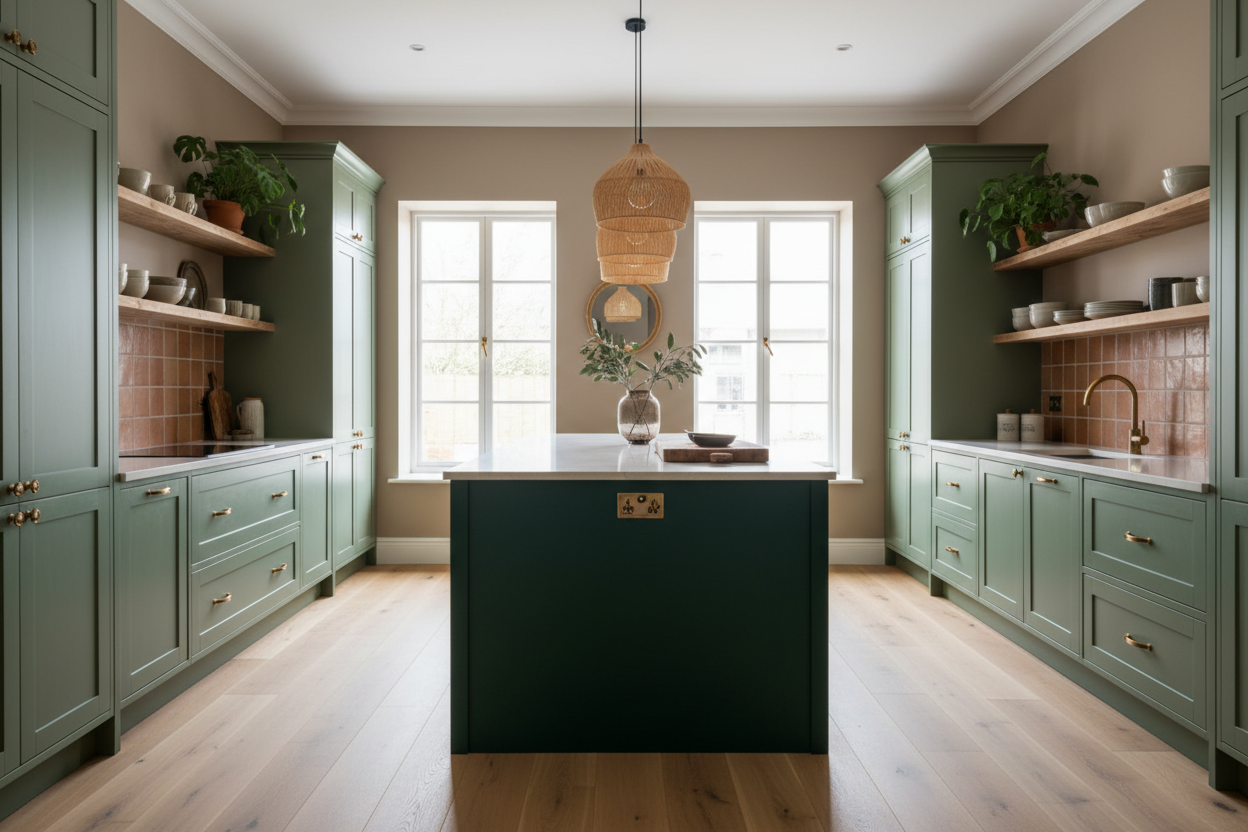
For a long time, American kitchens lived in monochrome. White cabinets, gray island, white walls, maybe a stainless backsplash. Beautiful — and completely forgettable. In 2026, that monochrome era is officially over. Walk into any well-designed NJ or NY kitchen this year and you'll find color: muted sage greens, sun-warmed terracotta, mushroom taupes, and creamy bone whites that feel hugged by warm sunlight.
After designing kitchens across the tri-state area for years, we've watched the color conversation evolve from "what's the safest white?" to "which warm tone fits our family best?" The kitchen is no longer trying to disappear into the architecture. It's trying to express something.
Here's the complete 2026 kitchen color palette — what's hot, what's exiting, and how to choose colors that won't feel dated by 2028.
The Big Shift: From Cool Grays to Warm Earth
For a decade, gray was the safety color of American kitchens. Greige walls, slate counters, charcoal islands — all variants of cool, neutral, decisively unwarm. The 2026 color palette is its complete opposite.
This year's kitchen colors share three traits:
- Earth-derived. Sage from rosemary plants, terracotta from baked clay, taupes pulled from dried grasses.
- Warm undertones. Yellow-based and red-based hues rather than blue-based.
- Forgiving. They hide fingerprints, water spots, and the chaos of family life better than cool grays ever did.
The shift maps to what designers call the "wellness palette" — colors that feel restorative rather than clinical.
The Five Colors Defining 2026 Kitchens
1. Sage Green (The Leader)
Sage green is the undisputed king of 2026 kitchen colors. We're seeing it everywhere — Fabuwood's Manhattan Greystone has been quietly replaced in many of our orders by softer green-hued shaker doors. Sage is gentle, sophisticated, and feels rooted in nature without screaming for attention.
Best applications:
- Island fronts with white perimeter cabinets
- Full lower cabinetry paired with cream uppers
- Pantry doors as an accent moment
Pairs beautifully with: brass hardware, walnut wood, white veined quartzite (like Calacatta Macchia Vecchia)
Avoid: chrome hardware, stark gray walls
2. Terracotta and Warm Clay
Terracotta is the surprise breakout of the season. Once relegated to Tuscan kitchens of the early 2000s, it's been completely reimagined — softer, dustier, and far more sophisticated. We've installed several "clay" cabinet kitchens in homes in Maplewood and Cobble Hill this year, and clients have been thrilled with how warm and inviting the rooms feel.
Best applications:
- Island only (full clay can overwhelm a small kitchen)
- Lower cabinets with white or cream uppers
- Range hood treatments
3. Mushroom and Putty Taupes
If sage feels too bold, mushroom taupes give you warmth without color commitment. These are the "warm grays" of 2026 — colors that look like a perfect cappuccino, holding their warmth without going beige.
Best applications:
- Full kitchen cabinetry for clients who want subtle
- Walls in an otherwise wood kitchen
- Trim and millwork
4. Creamy Bone and Antique White
This is what's replacing pure white. Sherwin-Williams' Alabaster, Benjamin Moore's White Dove and Swiss Coffee — these soft, yellow-tinged off-whites give you the brightness of white without the clinical chill. They photograph as "white" but feel completely different in the room.
5. Deep Forest and Olive Green (For the Bold)
For homeowners who want serious drama, deep forest and olive greens are having a moment in larger NJ kitchens. These work especially well in older homes — Victorians in Montclair, brownstones in Brooklyn, colonials in Westchester — where the architecture can support the saturation.
Colors That Are Exiting (and What to Use Instead)
| Exiting | Why It's Out | Use Instead |
|---|---|---|
| All-white shaker | Saturated, builder-grade | Creamy bone with warm wood island |
| Cool gray cabinets | Reads cold and dated | Mushroom taupe or sage green |
| Greige walls | Lacks personality | Warm bone or muted clay |
| Navy blue islands | Past peak, especially in NJ | Deep forest green or terracotta |
| Black-and-white | Stark, gallery-like | Walnut wood with bone white |
| Stainless backsplash | Trendy 2018–2022 | Quartzite slab or zellige tile |
How to Build Your Kitchen Color Story
The mistake most homeowners make is picking a "favorite color" and going all in. Here's a better framework we use with clients:
Choose three colors max:
- Anchor color (60% of the kitchen — usually cabinetry or walls)
- Secondary color (30% — often the opposite element: island, counter, or backsplash)
- Accent color (10% — hardware, light fixtures, stools, accessories)
A balanced sage-and-bone kitchen, for example: bone-white perimeter cabinets (60%) + sage island (30%) + brass hardware and warm wood floor (10%).
NJ/NY-Specific Color Tips
Northeast light is unique. Our region gets bright, cool morning light and warm afternoon light, with long shadows in winter. This affects how colors read in your space.
For north-facing kitchens (common in older NJ homes): avoid cool colors. The natural light is already cold, so sage and mushroom warm the room up.
For south-facing kitchens (common in newer Westchester and Long Island builds): you can go bolder. Deep forest greens and terracottas hold their character all day.
For galley kitchens in Manhattan and Hoboken brownstones: stick to lighter palette anchors (bone, light sage). Saturated colors compress small spaces.
Cost Considerations
Color choice rarely changes the cost of factory-finished cabinets from brands like Fabuwood, Cubitac, or TSG — sage and terracotta cost the same as white in their standard finishes. However:
- Custom paint matching (any color outside the brand's standard line) adds $800–$2,500 to a 10x10 kitchen
- Specialty finishes (matte lacquer, hand-glazed) add 10–25%
- Two-tone kitchens (different cabinet colors for uppers and lowers/island) typically add 5–10% versus single-color kitchens
Frequently Asked Questions
Q: Will sage green look dated in five years?
Sage has been part of the design vocabulary for centuries — it's not a flash-in-the-pan trend like 2018's millennial pink. As long as you choose a muted, classic sage (not a saturated lime or olive), it should age gracefully through 2030 and beyond.
Q: Can I mix sage cabinets with my existing oak floors?
Yes, beautifully. Sage and oak are a classic pairing. The only adjustment: pull the oak undertone (warm or cool) and make sure your sage shade complements it. Bring samples home before committing.
Q: What white pairs best with terracotta cabinets?
Cream-based whites with a hint of yellow (Benjamin Moore White Dove is reliable). Avoid pure or cool whites — they'll fight the terracotta's warmth.
Q: Are dark cabinets harder to keep clean?
Dark colors show water spots more than mid-tones, but hide food smudges and fingerprints better than white. Net: about the same maintenance, just visible in different ways.
Q: How do I test a paint color in my kitchen?
Paint a 2x2 ft swatch on poster board (not directly on the wall — it'll bleed through). Move it around the kitchen at different times of day. Live with it for 48 hours before deciding.
The Bottom Line
The 2026 kitchen is warm, personal, and finally moving past the monochrome era. Sage green leads the conversation, terracotta brings warmth, mushroom taupes offer subtle sophistication, and creamy bone whites have replaced the harsh whites of the 2010s.
If you're renovating in NJ or NY this year, the safest move isn't choosing "another white" — it's choosing a warm, earth-derived palette that will feel as good in 2030 as it does today.
Ready to design a 2026 kitchen that reflects your family — not last decade's trends? Home Craft Studio helps homeowners across NJ and NY build kitchens with carefully curated color palettes. Visit homecraftstudio.com to schedule a design consultation.
Share:
The New Tuscan Kitchen: How to Achieve 2026’s Hottest Kitchen Trend with a Modern Twist
How to Plan Your Spring Kitchen Renovation: A Step-by-Step Budget Guide for NJ Homeowners