






Walk into any tile showroom in Bergen, Essex, or Westchester County, and you'll see the two terms thrown around almost interchangeably: porcelain and ceramic. Sales associates often blur the distinction. Online listings frequently mislabel one as the other. And the cost difference is significant enough that homeowners make this decision wrong and pay for it for years.
We've installed both surfaces in NJ and NY bathrooms. Here's the honest comparison: what each material actually is, where each excels, and how to pick the right one for your specific bathroom application.
The Real Difference (It's Not What You Think)
Both ceramic and porcelain tiles are made from clay, fired at high temperatures into hard surfaces. The difference comes down to a few critical manufacturing variables:
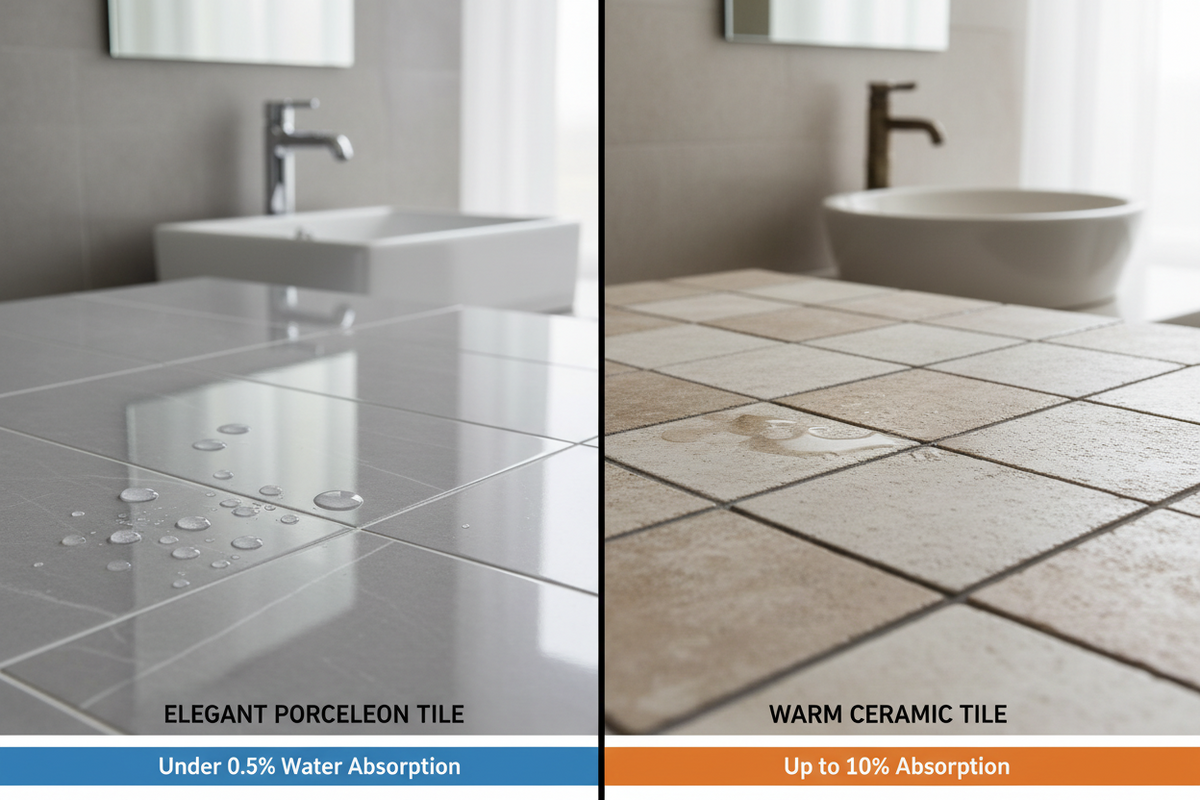
Ceramic tile is made from a coarser clay mix, fired at lower temperatures (1,650–2,000°F), and has higher water absorption (above 0.5%). The surface is harder than the body: most ceramic tile has a glazed top layer over a softer base.
Porcelain tile is made from finer, denser clay (often kaolin), fired at higher temperatures (2,200–2,500°F), and has lower water absorption (below 0.5%). The result is a much denser, harder, more water-resistant tile, often colored all the way through.
That single difference, water absorption, drives everything that matters about how these tiles perform in a NJ bathroom.
Water Resistance: The Decisive Factor
In a bathroom, this is the single most important consideration:
Porcelain absorbs less than 0.5% water by weight, so it's rated for full wet area use (showers, floors with frequent water exposure, even outdoor applications).
Ceramic absorbs 3–10% water, which is fine for backsplashes and dry-area walls, but increasingly risky in wet zones like shower floors and walls in primary bathrooms.
For shower areas, shower floors, or any heavily-used wet zone: porcelain is the right answer almost always.
For wall tile in low-water areas (vanity backsplashes, half-baths, dry sections of full baths): ceramic is fine and saves money.
Durability Comparison
Porcelain wins for:
- Scratch resistance (Mohs hardness 7–9 vs ceramic 4–6)
- Chip resistance (color goes through the entire body, so chips don't show as much)
- Freeze-thaw cycles (porcelain handles NJ winters; ceramic can crack on exterior installs)
- Heavy traffic (commercial-rated porcelain handles enormous foot traffic)
Ceramic wins for:
- Ease of installation (softer, easier to cut)
- Cost (typically 25–40% less than equivalent porcelain)
- Style variety in the low-cost segment
Cost Reality: What You'll Pay in NJ in 2026
| Tile Category | Cost per Sq Ft (Material Only) | Cost per Sq Ft (Installed) |
|---|---|---|
| Budget ceramic | $1.50–$4 | $12–$18 |
| Mid-range ceramic | $4–$10 | $15–$25 |
| Designer/handmade ceramic | $10–$30 | $20–$45 |
| Budget porcelain | $3–$7 | $14–$22 |
| Mid-range porcelain | $7–$18 | $18–$32 |
| Premium porcelain (large format, marble-look) | $18–$40 | $28–$60 |
The math: for a typical NJ primary bathroom (about 110 sq ft of tile including shower walls), choosing porcelain over ceramic adds roughly $400–$1,500 to the project. For most NJ homeowners, that's the right investment, but ceramic still has its place.
Where Each Wins in a NJ Bathroom
Here's the practical breakdown:
Use porcelain for:
- Shower floors (slip-rated R11 porcelain is essential)
- Shower walls (water resistance, longevity)
- Bathroom floors with frequent water exposure
- Large-format tile (porcelain handles oversize formats; ceramic cracks)
- Any application where the tile might experience freeze conditions (rare in bathrooms, common in outdoor)
Use ceramic for:
- Vanity backsplashes
- Wall tile in powder rooms
- Wall accents and decorative bands
- Wainscoting in dry zones
- When budget is tight and the location isn't a wet zone
Skip ceramic entirely for:
- Shower floors and walls
- Bathroom floors that get regular splashing
- Any application requiring large-format tile
- Heavy commercial or high-traffic environments
Visual and Style Considerations
Modern manufacturing has narrowed the visual gap dramatically. Premium ceramic tiles can look nearly identical to porcelain; the difference is in the body, not the surface. However:
Porcelain comes in larger formats. 24"x48", 32"x32", 48"x96" are common in porcelain; rare in ceramic.
Porcelain handles realistic stone and wood looks better. The denser body, full-body coloring, and modern printing technology give porcelain a depth that ceramic doesn't match for natural material reproductions.
Ceramic has more handmade and artisan options. Zellige, hand-painted Portuguese tile, encaustic cement tiles: these are largely ceramic territory.
Installation Differences That Matter
A few notes that affect cost and outcome:
Porcelain is harder to cut. Standard wet saws with ceramic blades will burn out cutting porcelain. Your installer needs porcelain-specific blades, so verify before hiring.
Porcelain is heavier. Walls receiving large-format porcelain may need additional structural support. Not an issue for most bathroom installations but worth confirming with your contractor.
Both require waterproofing. No tile is waterproof on its own. The waterproof membrane (Schluter Kerdi, Hydro Ban) is what protects the substrate, not the tile itself.
NJ-Specific Considerations
Older home subfloors. Pre-1960 NJ homes often have plank subfloors that flex too much for tile. Adding a cement backer board (HardieBacker or Durock) and proper underlayment is essential for either porcelain or ceramic.
Radiant heating compatibility. Both porcelain and ceramic work with radiant floor heating systems. Porcelain transfers heat slightly better due to its density.
Slip rating. NJ building code requires R10 minimum for bathroom floors, R11 for shower floors. Always verify the slip rating before purchasing, especially for imported tile.
Common Selection Mistakes
Buying porcelain "rated for shower" but rated for walls only. Porcelain is rated by use category. Shower floors require both wet-area rating and slip rating. Verify both.
Choosing ceramic for a shower because it was cheaper. The savings rarely justify the long-term water risk. Stick with porcelain in wet zones.
Mismatching tile and grout. Large-format porcelain looks best with thin grout joints (1/16"–1/8"). Standard ceramic typically uses 3/16"–1/4" joints. Plan grout color and width during design.
Skipping the sample test. Buy 2–3 sample tiles, bring them home, and observe them in your bathroom's actual lighting before ordering the full quantity.
Frequently Asked Questions
Q: Can I tell the difference between porcelain and ceramic just by looking?
Usually not. Look for these clues: porcelain tiles often have color all the way through (chip the edge to check), while ceramic typically shows a different-colored body under the glaze. Porcelain feels denser/heavier per square foot.
Q: Is porcelain worth the higher cost?
For wet areas (showers, full baths), yes, almost always. For dry-zone walls and backsplashes, ceramic is fine and saves money.
Q: Can ceramic crack in NJ winters?
Indoors, no. Temperature swings inside a heated home are minimal. Outdoors or in unheated spaces (mudrooms, sunrooms in winter), ceramic can crack from freeze-thaw cycles. Use porcelain outdoors.
Q: What's the lifespan of bathroom tile in NJ?
Well-installed porcelain bathroom tile lasts 30+ years easily. Ceramic in appropriate applications also lasts 30+ years. Replacement is usually driven by style preference, not failure.
Q: Are large-format tiles harder to maintain?
Counterintuitively, easier. Fewer grout lines means less cleaning. The grout is usually the maintenance pain point in any tile installation.
The Bottom Line
For NJ and NY bathroom installations in 2026:
- Wet zones (shower floors, shower walls, bathroom floors): porcelain almost always
- Dry zones (vanity backsplash, powder room walls, accent panels): ceramic is fine and saves money
The 25–40% cost premium for porcelain in wet areas is one of the most sensible long-term investments in a bathroom renovation. The 25–40% you save by using ceramic in dry zones lets you upgrade other surfaces or invest in better fixtures.
Don't let a showroom blur the distinction. Know which material belongs where, and your bathroom tile will hold up for decades.
Home Craft Studio specializes in bathroom tile installation across NJ and NY, with experience installing both porcelain and ceramic for the right applications. Visit homecraftstudio.com to plan your bathroom tile project.
Whichever tile you choose, check it against the vanity finish before ordering either. Our bathroom vanities collection breaks 214 units down by color and finish, including 76 white and 58 gray cabinets.
Share:
2026 Bathroom Tile Trends: What's Hot Now, From Zellige to Tile Drenching
Backsplash Ideas That Sell Homes: Top Tile Trends Boosting NJ Property Value in 2026