





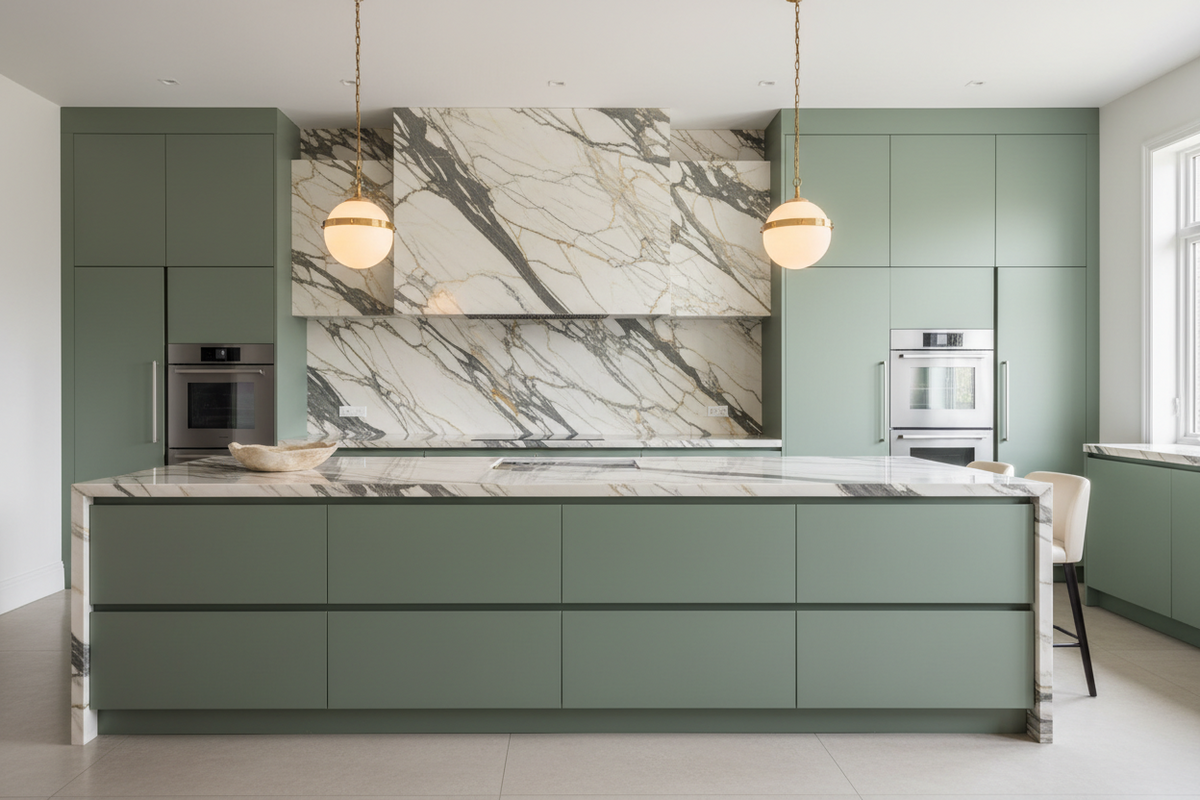
Walk into any high-design 2026 kitchen and you'll notice something subtle but transformative: the visual line between countertop and backsplash has disappeared. Instead of a quartz counter meeting a tile backsplash at a hard horizontal edge, the same stone slab continues seamlessly up the wall. The industry has a new term for this look — "counterplash" — and it's quietly becoming the defining detail of premium NJ and NY kitchens.
We've installed counterplash treatments in dozens of homes over the past 18 months at Home Craft Studio. Clients consistently react the same way during the install: "Oh — I didn't know it could look this good." Here's how the counterplash trend works, where it's worth the investment, and the technical realities NJ homeowners need to understand before committing.
What "Counterplash" Actually Means
A counterplash is a backsplash made from the same slab material as your countertop, run from the counter surface up the wall to a meaningful height — typically 18" to 30", sometimes all the way to the bottom of upper cabinets.
Three variations dominate 2026:
1. Short counterplash (4–6 inches): The traditional move — a slab "backsplash" the height of an outlet, matching the counter. Subtle, refined.
2. Mid-height counterplash (18–24 inches): Stone runs from counter to just under the bottom of upper cabinets. This is the 2026 sweet spot — dramatic enough to read as designed, modest enough to control cost.
3. Full-height counterplash (counter to ceiling): Stone covers the entire wall behind the counter, often wrapping around hood or window areas. Maximum visual impact, premium investment.
Why Counterplash Is Replacing Tile Backsplash in 2026 Kitchens
The trend isn't just aesthetic. Functional advantages drove its adoption:
No grout lines to clean. Tile backsplashes accumulate grease, sauce, and water stains in grout lines that no homeowner has ever enjoyed scrubbing. A continuous stone slab wipes clean with a single pass of a microfiber cloth.
Visual continuity. The hard horizontal break between counter and backsplash disappears. The kitchen reads as a single sculpted surface rather than assembled parts.
Better behind ranges and sinks. Stone behind a range handles oil splatter dramatically better than grouted tile. Stone behind a sink doesn't develop water staining in joints.
Strong resale signal. In NJ markets above $750K, buyers increasingly read counterplash treatments as luxury. It's becoming the new benchmark for premium kitchens.
Best Stones for Counterplash Installations
1. Premium Quartz with Marble-Like Veining
Cambria, Caesarstone, and MSI Q now produce slabs specifically engineered for counterplash applications — with veining patterns designed to extend visually up a wall. The lower maintenance makes this the smart choice for family kitchens.
Cost premium for counterplash: 25–40% over standard counter installation.
2. Quartzite (For Maximum Drama)
Quartzite slabs with dramatic veining — Calacatta Macchia Vecchia, Cristallo, Patagonia — deliver counterplash moments that genuinely stop conversation. Each slab is unique, so the look in your kitchen is one-of-a-kind.
Cost premium: 30–50% over standard counter installation.
3. Porcelain Slabs (The Underrated Option)
Large-format porcelain panels (Neolith, Dekton, Florim) come in book-matched pairs specifically designed for counterplash continuation. Heat, scratch, and stain resistance is bulletproof.
Cost premium: 20–35% over standard counter installation.
4. Marble (For the Aesthetics-First Client)
Calacatta or Statuario marble counterplash treatments are stunning but high-maintenance — every drop of oil, citrus, or wine on the vertical surface needs immediate attention. Reserve for primary entertaining kitchens, not heavy daily-use kitchens.
Cost premium: 35–60% over standard counter installation.
The Technical Reality: How Counterplash Gets Installed
Counterplash isn't just "more stone." The installation process involves real complexity:
Slab matching. The counter and the vertical piece must come from the same slab (or book-matched adjacent slabs) for the veining to flow naturally. This means buying additional stone material upfront and planning the cuts carefully.
Wall preparation. Vertical stone needs perfectly flat wall surfaces. Older NJ homes with plaster walls or imperfect drywall require leveling and prep before stone goes up.
Specialized adhesives. Heavy stone on vertical surfaces requires modified thinset adhesives and mechanical fastening at certain points. Standard tile adhesives are not appropriate.
Electrical pre-planning. Outlet placement must be planned and roughed-in before stone install. Once stone is on the wall, moving an outlet is enormously disruptive.
Seam placement. For longer walls, seams are inevitable. Skilled fabricators place seams in non-prominent locations — typically behind appliances or at natural wall transitions.
Cost Reality (NJ/NY 2026)
| Counterplash Type | Additional Investment vs. Standard Counter + Tile Backsplash |
|---|---|
| Short counterplash (4–6") | $800–$2,500 |
| Mid-height counterplash (18–24") | $3,500–$8,500 |
| Full-height (counter to ceiling) | $7,500–$22,000 |
The savings: you eliminate the cost of tile backsplash (typically $1,500–$5,000) but add the cost of additional stone and fabrication.
Hidden costs to budget:
- Wall preparation if existing surfaces are uneven: $400–$1,500
- Electrical pre-planning and rough-in adjustments: $300–$800
- Specialized installer labor (waterfall-experienced): typically 20–40% premium over standard fabrication
Where Counterplash Works Best in NJ Kitchens
Behind the range — The single highest-leverage spot. Range area sees the most splatter and is the most visually prominent. Many homeowners do counterplash only behind the range, with tile elsewhere.
Behind the main sink — Eliminates water staining in grout joints. Particularly valuable in primary cooking kitchens.
Around windows — Continuing stone up to meet window trim creates a remarkable architectural moment.
Wrap to upper cabinets — The full-height counterplash that meets upper cabinets directly, eliminating any wall surface visible between counter and uppers.
NJ-Specific Considerations
Older home plaster walls. Many pre-1960 NJ homes have plaster walls. Stone counterplash can be installed over plaster but requires careful prep and adhesive selection. Some homes need plaster removal and replacement with cement backer board first.
Settled houses and unlevel walls. Older NJ homes settle over decades. Walls that look straight may actually be out of plumb by 1/2" or more. Counterplash on an unlevel wall creates obvious gaps and shadows. Insist on wall straightening before stone install.
Building code outlet requirements. NJ residential code requires GFCI outlets at specific intervals along kitchen counters. Plan electrical with the counterplash design — outlets can be moved before stone install, not after.
Common Counterplash Mistakes
Mismatching counter and counterplash veining. The whole point is visual continuity. If the counter and the vertical piece come from different parts of the slab (or different slabs entirely), the look is jarring.
Skimping on wall prep. Stone exposes wall imperfections that tile would hide. Budget for proper wall preparation, even if it adds $1,000 to the project.
Going partial-height awkwardly. A 12"-high counterplash is the worst of both worlds — too tall to be a short accent, too short to be the proper mid-height treatment. Choose 4–6 inches, 18–24 inches, or full-height. Skip the in-between.
Mixing stone counterplash with busy tile elsewhere. Counterplash needs to be the visual focus. Pair it with quiet wall finishes — painted wall above, simple cabinet finishes, restrained hardware. A busy counterplash plus busy tile plus busy cabinet hardware creates chaos.
DIY attempt. Counterplash is not a DIY project. Even experienced tile installers struggle with stone slab vertical work. Hire fabricators who have completed waterfall installations — the skill set transfers.
Frequently Asked Questions
Q: Is counterplash worth the cost premium over tile backsplash?
For most NJ kitchens above mid-range pricing, yes. The visual impact, maintenance reduction, and resale signal justify the $3,500–$8,500 mid-height premium. For budget projects, tile backsplash still makes financial sense.
Q: Can I do counterplash with quartz instead of natural stone?
Yes, and for family kitchens we often recommend it. Premium quartz with marble-look veining delivers nearly identical visual impact at lower cost and maintenance.
Q: How long does counterplash add to renovation timeline?
Typically 1–2 weeks. Slab selection takes longer (you need additional matching pieces), fabrication is more complex, and installation requires more precision than standard counter work.
Q: Will counterplash crack from house settling?
Properly installed counterplash with appropriate adhesives and expansion joints handles normal house movement. Rapid settling in newer homes (within first 2 years) can cause issues — worth discussing with your fabricator if your home is new construction.
Q: Can I install outlets through counterplash?
Yes, with proper pre-planning. Outlets are cut into the slab during fabrication, not after install. Surface-mounted outlets after the fact look amateurish and risk damaging the stone.
The Bottom Line
The counterplash trend transforms 2026 NJ kitchens from "counter + backsplash" into a single sculptural moment. The mid-height (18–24 inch) treatment is the sweet spot for most homes — dramatic enough to read as premium design, controllable enough to manage cost. Behind the range is the single highest-leverage location.
For homeowners renovating in NJ or NY this year, counterplash deserves serious consideration during the design phase. The visual impact lasts decades; the maintenance benefits start the day you move in.
Home Craft Studio designs and installs counterplash treatments across NJ and NY with experienced stone fabrication partners. Visit homecraftstudio.com to explore options in our showroom.
Share:
Waterfall Countertops: Design Guide, Cost & Best Stone Options for NJ Kitchens