





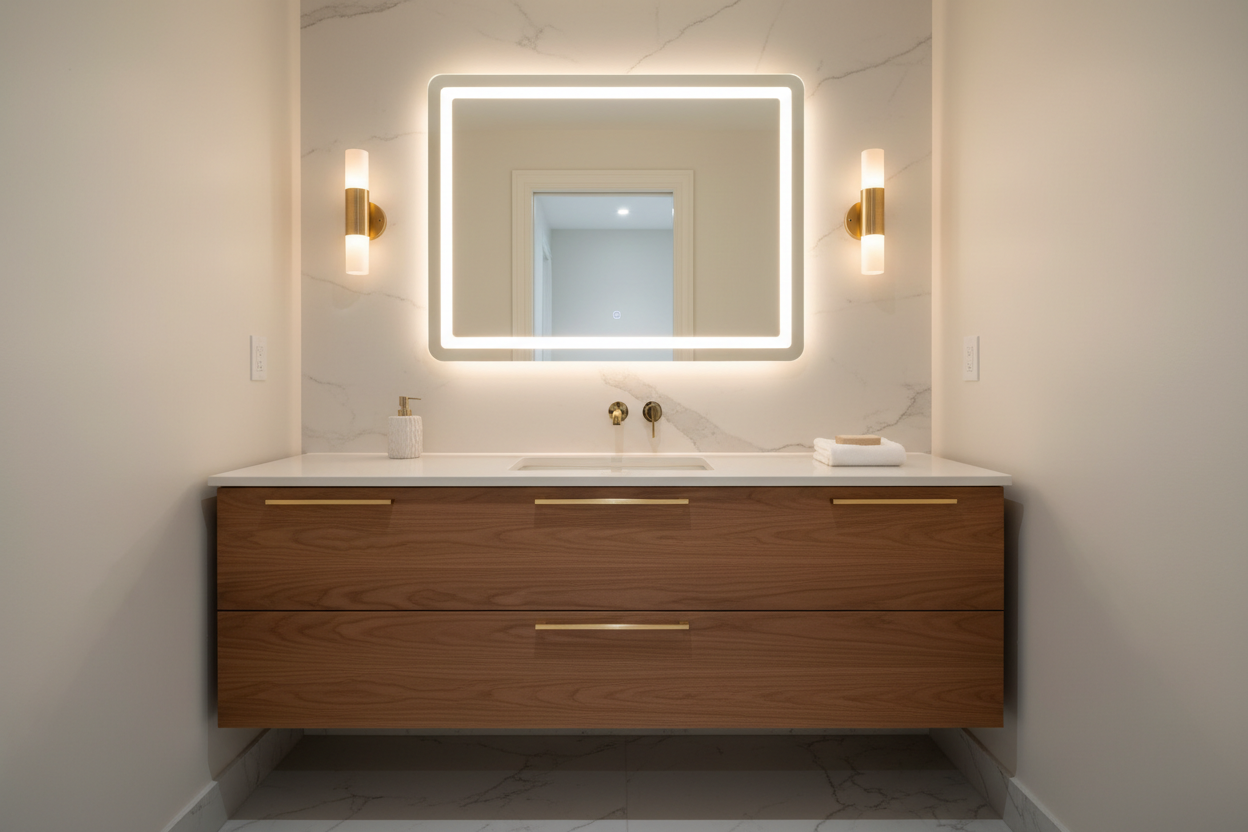
The bathroom vanity is often the most-photographed piece of furniture in the bathroom. Open Instagram, Pinterest, or Zillow listings, and the vanity is what catches the eye first, before the toilet, the shower, or even the tile. In 2026, the vanity has changed: it floats away from the floor, finished in warm woods that bring kitchen-quality craftsmanship into the bath, and paired with smart mirrors that genuinely earn their place.
After installing vanities in NJ and NY homes ranging from compact Hoboken powder rooms to sprawling primary baths in Saddle River, we've watched the design conversation shift. Here's the 2026 playbook for the bathroom vanity: what's trending, what works, and what's worth your investment.
Why Floating Vanities Are Dominating 2026
A floating vanity (also called a wall-mounted vanity) is exactly what it sounds like: the cabinet is mounted to the wall, leaving open space underneath. No legs touching the floor, no decorative toe-kick. It's a small design choice with outsized impact.
Why it works so well in 2026 bathrooms:
- Visual expansion. Showing the floor underneath the vanity makes the bathroom feel 15–20% larger. Critical for small NJ and NYC bathrooms.
- Easier cleaning. No baseboard, toe-kick, or floor-to-cabinet joint to trap hair and dust.
- Modern aesthetic without coldness. Particularly when paired with warm wood finishes, floating vanities feel architectural rather than sterile.
- Lighting opportunity. Most floating vanities incorporate under-cabinet LED strips that wash the floor with soft light, useful for late-night use without harsh overhead lighting.
The Warm Wood Vanity Revolution
For years, bathroom vanities defaulted to two finishes: white-painted or dark espresso. Both are now retreating in favor of warm, natural wood finishes, the same shift happening in kitchens.
Most-requested wood finishes for 2026 bathroom vanities:
- Rift-cut white oak: The clear leader. Tight, linear grain reads as modern and refined.
- Walnut: Deeper, richer tone for primary bathrooms. Pairs well with marble or quartzite tops.
- Light maple or ash: For smaller bathrooms where dark wood would compress the space.
- Cerused oak: White pigment rubbed into the grain for a European feel.
- Reclaimed wood: For homeowners willing to pay a premium for one-of-a-kind character.
What's exiting: dark espresso, glossy white paint, and any finish that screams "home center special."
The Smart Mirror: From Gimmick to Genuinely Useful
The smart bathroom mirror was a gimmick in 2020. It's a legitimate utility in 2026. Modern smart mirrors integrate front-facing LED lighting, anti-fog technology, time and weather displays, Bluetooth speakers, and (in some cases) thoughtful health metrics.
Features that have crossed the gimmick-to-useful line:
- Color-temperature-adjustable front lighting (3000K–5000K) for accurate makeup application and shaving
- Anti-fog heating element that keeps the mirror clear during showers, a bigger daily improvement than it sounds
- Dimmable backlight for ambient lighting during nighttime use
- Time and weather display integrated subtly into the mirror surface
- Bluetooth audio for music or podcasts during morning routines
Features still in gimmick territory:
- Skin analysis (inconsistent accuracy)
- Video conferencing through the mirror (no clear use case)
- Heart rate monitoring (better handled by a watch)
Quality smart mirror brands for 2026: Capstone, Hauschen, Krugg, Anvige. Investment ranges from $400 (basic) to $2,200 (premium primary bath).
Vanity Configurations That Work in NJ Bathrooms
Powder Room: Single Floating Vanity + Smart Mirror
A wall-mounted 24"–36" vanity in warm wood, paired with a stone slab top. Smart mirror with adjustable lighting above. Total investment: $1,800–$4,500.
Standard Hall Bathroom: Single Floating Vanity, 36"–48"
Larger floating vanity in oak or walnut, quartz or quartzite top, single undermount sink, integrated LED toe lighting. Smart mirror with anti-fog. Investment: $3,500–$8,500.
Primary Bathroom: Dual Floating Vanity, 60"–84"
Two undermount sinks in a single long floating cabinet, premium stone slab, hidden storage drawers, integrated electrical for hair tools, dual smart mirrors. Investment: $8,000–$22,000.
Compact NYC/Hoboken Bathroom: Petite Floating Vanity
A 18"–24" floating vanity, vessel sink, single smart mirror. Maximizes visual space in tiny urban bathrooms. Investment: $1,500–$3,800.
Cost Reality: NJ/NY Vanity Investment Tiers
| Tier | Total Investment (vanity + counter + sink + faucet + mirror) |
|---|---|
| Budget refresh | $1,500–$3,000 |
| Mid-range floating vanity | $3,500–$7,500 |
| Premium floating vanity with smart mirror | $8,000–$15,000 |
| Luxury dual vanity with custom millwork | $18,000–$45,000+ |
Hidden costs to budget for:
- Plumbing rough-in changes if relocating: $800–$2,500
- Electrical for smart mirror and integrated lighting: $300–$800
- Wall reinforcement for floating vanity (sometimes required): $200–$500
NJ-Specific Vanity Considerations
Wall reinforcement. Floating vanities transfer load to the wall, not the floor. Older NJ homes with plaster walls or 2x4 framing may need blocking added during construction, typically a $200–$500 detail. Verify with your contractor.
Plumbing height. Floating vanities require specific drain and water supply heights. Older NJ homes often have rough-in heights that don't accommodate floating vanity design, so plan adjustments during the design phase.
Storage tradeoffs. Floating vanities typically offer 10–20% less storage than floor-standing equivalents of the same width. If storage is critical, choose wider or taller floating designs.
Humidity exposure. NJ's humidity swings stress bathroom cabinetry. Factory-finished cabinets from quality manufacturers handle this well. Custom millwork should be finished with marine-grade or bathroom-rated sealers.
Common Mistakes With Floating Vanities
Going too small. A 24"-wide floating vanity in a 70 sq ft bathroom looks lost. Match the vanity scale to the room.
Mounting too high or too low. Standard counter height for a floating vanity is 32"–36" from the floor. Mounting it higher than 36" creates an awkward stretch; lower than 32" feels childlike.
Forgetting toe-kick lighting. The signature look of a floating vanity is the soft glow of LEDs under the cabinet. Skipping the lighting eliminates half the visual benefit.
Ignoring proportion with the mirror. The mirror should be roughly 70–80% of the vanity width. Smaller mirrors look stingy; full-width mirrors above a single sink can look oversized.
Choosing wood for a poorly ventilated bathroom. Wood vanities in bathrooms without proper exhaust ventilation will swell, warp, and discolor. Confirm your bathroom has adequate venting before choosing wood finishes.
Frequently Asked Questions
Q: Do floating vanities hold up over time in family bathrooms?
Yes, when properly installed. The wall mounting is structurally sound; the failure point is almost always inadequate wall blocking, not the vanity itself. Verify your installer adds proper blocking.
Q: Will a smart mirror short out from bathroom humidity?
Quality smart mirrors are IP44-rated or better, designed for bathroom humidity. Avoid budget imports without proper ratings.
Q: Is real wood vanity worth it over wood-look laminate?
For a primary bathroom you'll use daily, yes. The depth and aging quality of real wood is noticeable. For a guest bathroom or secondary space, premium wood-look laminate (Wilsonart, Formica) is a sensible compromise.
Q: Do floating vanities work for children's bathrooms?
Yes, but mount at a lower height (28"–30") and choose a vessel sink rather than undermount to reach water more easily. Step stools help for younger children.
Q: Can I retrofit a floating vanity into my existing bathroom?
Often yes, but the plumbing rough-in needs to be at the correct height. If your existing rough-in is positioned for a floor-standing vanity, expect $800–$2,000 for plumbing adjustments.
The Bottom Line
The 2026 bathroom vanity is floating, warm-wood-finished, and paired with a smart mirror that genuinely earns its space. The combination feels modern without coldness, expensive without ostentation. For NJ and NY homeowners renovating this year, this is the configuration with the strongest combination of daily utility, visual impact, and resale appeal.
From a $2,500 powder room update to a $25,000 primary bathroom, the floating vanity + smart mirror playbook scales to the budget.
Home Craft Studio designs and installs custom bathroom vanities across NJ and NY, featuring premium wood finishes, integrated lighting, and smart mirror technology. Visit homecraftstudio.com to plan your bathroom renovation.
Every wall-hung, warm-wood and mirror option described above is stocked. Our bathroom vanities collection holds 214 units from iStyle and Lexora, including 52 wall-hung models and brushed wood-grain finishes, with a size-by-size breakdown from 18 to 84 inches.
Share:
Cabinet Refacing vs. Replacing: How to Decide (and What Each Really Costs)
Fall Kitchen Renovation Planning: Why September Is the Best Month to Start Your NJ Remodel