





Cabinet hardware is the jewelry of the kitchen. It's the smallest line item in any renovation, typically less than 1% of the total budget, but it's also the detail buyers and guests touch most. The wrong pulls and knobs can date an otherwise beautiful kitchen overnight. The right ones make a mid-range installation look thousands of dollars more expensive than it is.
Across NJ and NY kitchen projects, we've watched the conversation evolve from "polished chrome and nickel" through "matte black" to where we are now: a much richer 2026 palette led by brushed brass, fluted profiles, and warm mixed metals. Here's the complete 2026 hardware trend guide for NJ homeowners.
The Three Defining Hardware Finishes for 2026
1. Brushed Brass (The Clear Leader)
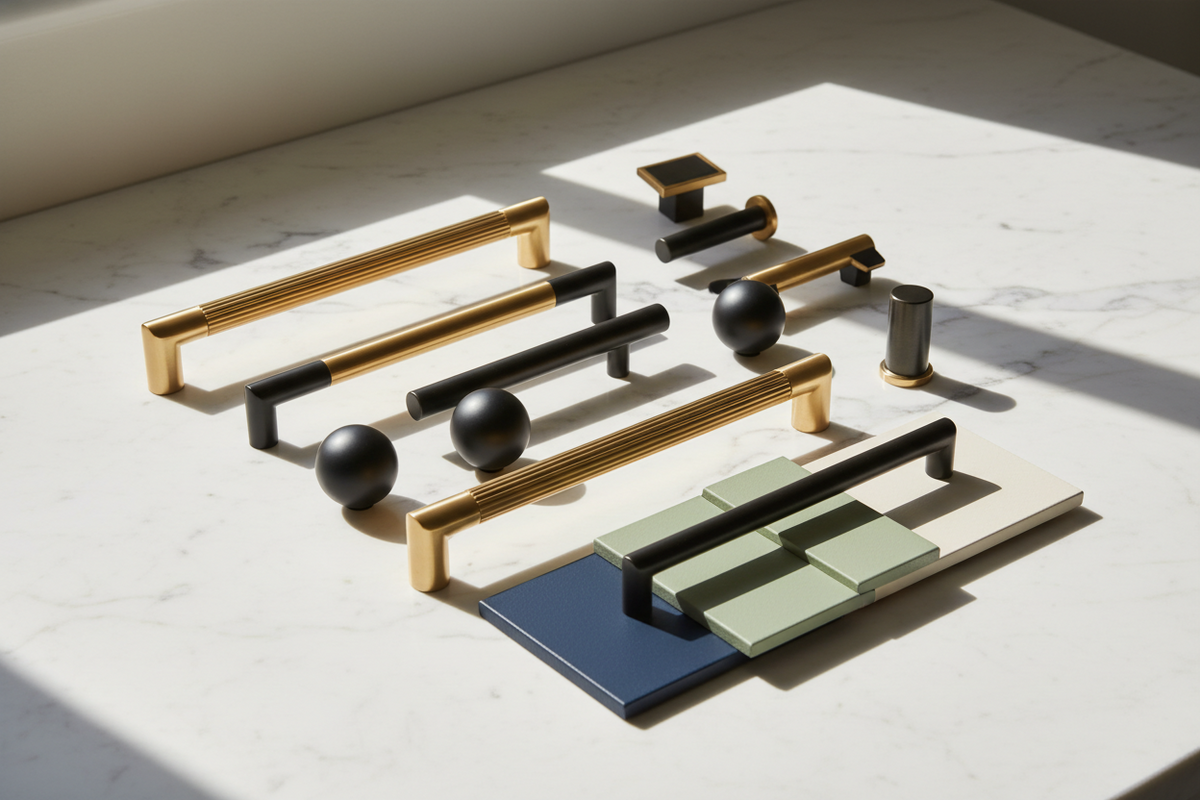
Unlacquered brushed brass (sometimes called "living brass" because it develops patina over time) is the most-requested cabinet hardware finish in our NJ showroom right now. The warm gold tone reads as classic without being polished or shiny. It pairs beautifully with the 2026 color palette (sage green cabinets, warm wood, creamy whites) and adds the warmth that cool chrome and nickel can't deliver.
Best for: Almost any 2026 kitchen style: modern, transitional, or classic.
Price range: $8–$45 per pull, $4–$25 per knob (mid-range to premium).
2. Matte Black (Still Strong, More Refined)
Matte black has matured. In 2018 it was bold and edgy. In 2026 it's a quiet baseline finish, particularly in modern and Japandi-influenced kitchens. The black-with-warm-wood pairing remains one of the most photographed kitchen combinations of the year.
Best for: Contemporary kitchens, modern transitional, kitchens with darker palettes.
Price range: $6–$35 per pull, $3–$20 per knob.
3. Aged Brass and Burnished Brass (The Antique Move)
For homeowners who want warmth with more character than polished brushed brass, aged or burnished brass adds an immediate sense of history. Particularly effective in older NJ homes where brand-new hardware can look out of place.
Best for: Victorian and colonial homes, English-style kitchens, character-driven renovations.
Price range: $12–$60 per pull, $6–$30 per knob.
The Defining Profiles for 2026
1. Fluted and Reeded Pulls
The breakout profile of the year. Fluted pulls feature vertical ridges along the length of the handle, adding texture and visual interest without complexity. They photograph beautifully and feel deliberate in hand. Fluted brass pulls have been a frequent choice in NJ kitchens this year, and the look reads as refined rather than trendy.
2. Slim Bar Pulls (Long Edge-Pull Style)
For contemporary and Japandi kitchens, long slim bar pulls (typically 8–18 inches) running along drawer fronts create clean horizontal lines. Often used as integrated finger-pulls along the top edge of drawers rather than visible hardware.
3. Knurled (Texture Detail)
Knurled hardware features a fine cross-hatched texture along the gripping surface. It started as an industrial detail and now signals a higher-end kitchen. Particularly effective in brass and unlacquered finishes where the texture catches light.
4. Cup Pulls (For Traditional Kitchens)
Half-moon "cup" pulls return in 2026 for traditional and English-country kitchens. Best paired with knobs on upper cabinets and aged brass finishes.
5. Leather and Wood Pulls (The Specialty Move)
For Japandi, organic-modern, and biophilic kitchens, leather strap pulls and shaped wood pulls add natural texture that metal hardware can't deliver. Best used sparingly, typically on island cabinets or pantry doors.
Mixing Hardware Finishes: The 2026 Rules
For years, kitchen designers preached "all hardware finishes must match." In 2026, that rule has relaxed, with caveats:
You CAN mix:
- Cabinet hardware finish with faucet finish (brass cabinet pulls + black faucet is fine)
- Cabinet hardware finish with light fixture finish (brushed brass pulls + matte black pendants work)
- Two metal finishes IF one is dominant and one is accent (80/20 rule)
You SHOULDN'T mix:
- Two different cabinet hardware finishes within the same cabinet run
- Pure polished finishes with brushed finishes (the contrast looks accidental)
- More than three metal finishes in a single kitchen total
Hardware-to-Cabinet Combinations That Work in 2026
| Cabinet Style | Best Hardware Finish | Best Profile |
|---|---|---|
| White shaker | Brushed brass or matte black | Fluted bar pulls |
| Natural white oak | Matte black or aged brass | Slim bar or knurled |
| Sage green | Brushed brass (classic) or aged brass | Cup pulls or fluted |
| Walnut slab | Matte black or unlacquered brass | Slim bar or integrated |
| Cream/bone | Aged brass or burnished brass | Knurled or traditional |
| Deep navy or forest green | Brushed brass or polished nickel | Cup pulls or knurled |
Cost Reality: Hardware Investment for NJ Kitchens (2026)
A typical 10x10 NJ kitchen has approximately 25–40 cabinet doors and drawers requiring hardware. Total hardware cost depends entirely on the quality tier:
| Tier | Per-Piece Cost | Total Kitchen Hardware Cost |
|---|---|---|
| Budget (Amazon, Home Depot stock) | $2–$8 | $60–$320 |
| Mid-range (Top Knobs, Schaub, Berenson) | $8–$25 | $240–$1,000 |
| Premium (Emtek, Sun Valley Bronze, Buster + Punch) | $25–$80 | $750–$3,200 |
| Designer (Armac Martin, custom artisan) | $80–$300+ | $2,400–$12,000+ |
For most NJ homeowners, the mid-range tier ($240–$1,000) delivers the right combination of quality, design variety, and value. Premium hardware makes sense in higher-end kitchens; designer hardware in luxury renovations.
Hardware Brands Worth Knowing for 2026
Top Knobs: Strong mid-range American brand with extensive variety in brass and matte black finishes. Reliable quality.
Schaub: Mid-range American brand with particularly strong knurled and fluted offerings.
Emtek: Premium American brand. Excellent solid-brass construction. Available at most NJ showrooms.
Buster + Punch: British premium brand known for distinctive knurled hardware. Beautiful but expensive.
Rejuvenation: Strong mid-range with vintage-inspired profiles. Direct-to-consumer pricing.
Hapny Home: Mid-range American brand with growing reputation for quality finishes.
Armac Martin: British luxury brand. Sustainable manufacturing. Designer kitchens only.
Installation Considerations
Drilling templates. Insist your installer use drilling templates for consistent placement. The single most common hardware installation error is inconsistent drill placement across doors, and the inconsistency shows from across the kitchen.
Length matters for drawers. Standard guidance: pulls should be 1/3 to 1/2 the width of the drawer. A 24-inch drawer looks under-scaled with a 4-inch pull and over-scaled with a 16-inch pull.
Mixing pulls and knobs. The 2026 standard: pulls on drawers, knobs on doors. This convention reads as intentional rather than accidental. The reverse (knobs on drawers, pulls on doors) looks dated.
Cabinet door grain direction. Pulls should mount horizontally on horizontal grain doors, vertically on vertical grain doors. This detail matters more on wood cabinets than painted.
Common Hardware Mistakes
Too small for the scale of the cabinets. Tiny knobs on large upper cabinets look stingy. Match hardware scale to cabinet scale.
Too trendy. The bright copper hardware that defined 2017 looks dated now. Stick to enduring finishes (brass, black, nickel) rather than flash-in-the-pan colors.
Polished where matte would work. High-polish brass and nickel show every fingerprint and water spot. Matte and brushed finishes hide daily use far better in NJ family kitchens.
All knobs, no pulls. Knobs alone require pinching to operate, which is difficult for elderly hands, kids, or anyone with wet/greasy fingers. Use pulls on drawers and high-use cabinets.
Going too cheap. Hardware is touched dozens of times a day for years. Cheap hardware fails quickly, develops loose screws, and feels flimsy in hand. The mid-range premium ($8–$25 vs $2–$8) is worth every dollar.
Frequently Asked Questions
Q: Can I replace cabinet hardware without renovating the rest of the kitchen?
Yes. It's one of the highest-impact, lowest-cost kitchen refreshes available. A skilled installer can replace hardware on a typical NJ kitchen in 3–5 hours. Costs run $250–$1,000 for hardware plus $300–$600 for labor.
Q: Will brushed brass tarnish over time?
Unlacquered brushed brass develops a natural patina over months and years. That is a feature for clients who love the lived-in look, a concern for those who prefer pristine finishes. Lacquered brushed brass maintains its appearance longer but eventually shows wear in lacquer.
Q: How do I know what size pulls to buy?
Standard measurements: 3-inch pulls for cabinet doors, 4-inch pulls for small drawers, 5–6-inch pulls for medium drawers, 8–12-inch pulls for large drawers. Bring drawer dimensions to the showroom.
Q: Are knobs more practical or are pulls?
Pulls win for accessibility because they're easier to grip with wet, greasy, or compromised hands. Knobs win for traditional aesthetics. The 2026 standard: pulls on drawers, knobs on cabinet doors. This combination is both practical and visually balanced.
Q: How do I clean brass hardware?
For lacquered brass: warm soapy water and a soft cloth. For unlacquered brass: leave the patina; if you want to restore shine, use a brass cleaner like Brasso every 1–2 years.
The Bottom Line
Cabinet hardware is the cheapest meaningful upgrade in any 2026 NJ kitchen renovation. The right brushed brass, matte black, or aged brass pulls and knobs can make mid-range cabinets look premium and premium cabinets look custom.
For most NJ homeowners, invest in mid-range hardware ($240–$1,000 for a typical kitchen) in fluted, knurled, or slim-bar profiles, and you'll have hardware that ages gracefully through the next decade. Skip the budget tier; the savings aren't worth the daily disappointment.
Home Craft Studio designs kitchens with carefully selected cabinet hardware from quality American and European brands. Visit homecraftstudio.com to explore hardware options in our showroom.
Hardware for profiled doors
Cup pulls and knobs in an aged finish suit mitered and raised panel doors. The door styles they are usually specified with are in traditional kitchen cabinets.
Share:
Japandi Kitchen Design: How to Achieve the Serene 2026 Aesthetic with the Right Cabinets & Tiles