




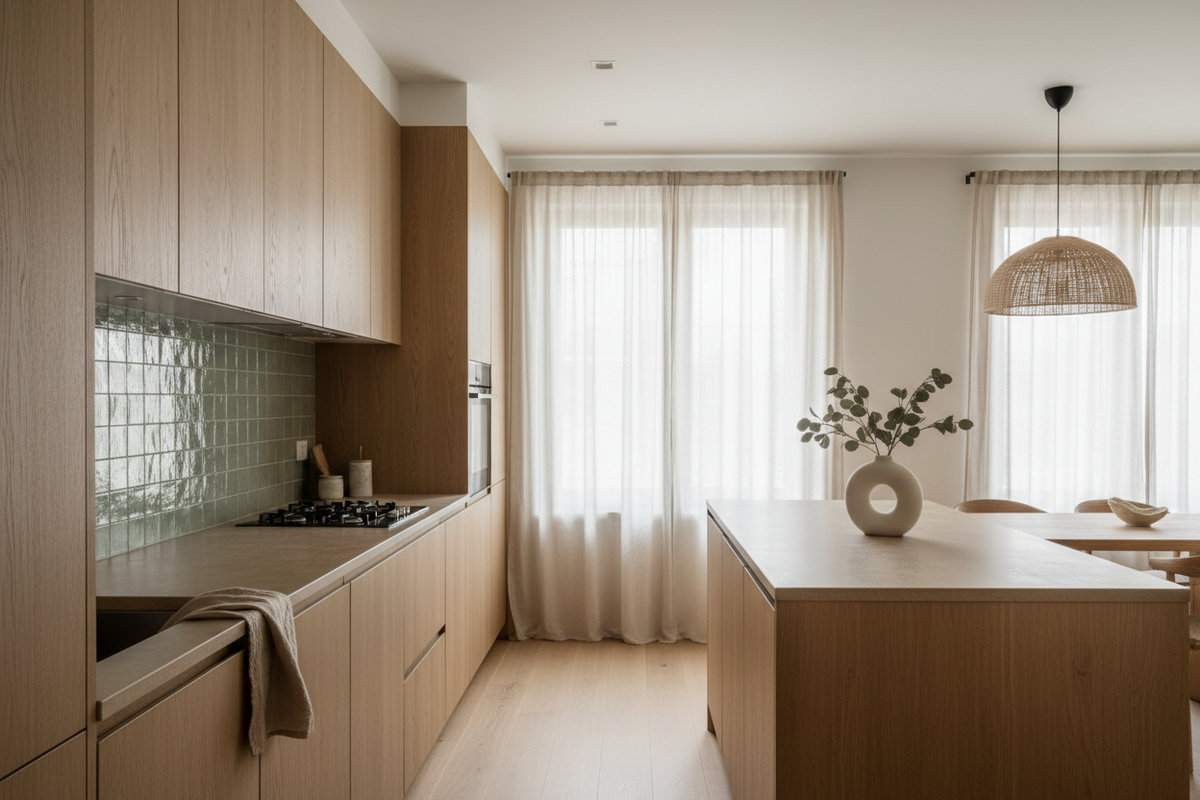
Japandi is the design term you'll hear over and over in 2026 — a hybrid of Japanese minimalism and Scandinavian functional warmth that has quietly become one of the most-requested kitchen styles in modern NJ and NY homes. It's not a trend in the flashy sense. It's the opposite. Japandi succeeds precisely because it feels timeless, calm, and intentional in a world where every other design choice screams for attention.
We've designed and installed Japandi kitchens across the tri-state area — from minimalist Manhattan apartments to thoughtful primary kitchens in suburban Bergen County. The clients who arrive asking for it are usually professionals who want their homes to feel like a sanctuary at the end of demanding workdays. Here's the complete 2026 guide to building a Japandi kitchen with the right cabinetry, tile, and material choices.
What Japandi Actually Is (And Isn't)
Japandi combines two design philosophies that share more than people realize:
From Japanese design: Minimalism, reverence for natural materials, the principle of "ma" (intentional negative space), wabi-sabi (beauty in imperfection), and a deep respect for craftsmanship.
From Scandinavian design: Functional simplicity, light wood tones, warm textiles, hygge (cozy contentment), and an emphasis on bringing nature indoors.
The hybrid produces kitchens that are quiet but warm. Minimalist but functional. Restrained but inviting. The aesthetic feels intentional rather than empty.
What Japandi isn't: Cold modernism. Pure Japanese sparseness. Scandinavian IKEA-aesthetic. Glossy contemporary minimalism. The differentiating factor is warmth combined with restraint.
The Core Elements of a Japandi Kitchen
1. Light Natural Wood Cabinetry
The defining cabinet finish is rift-cut white oak, light maple, or ash — woods that read as warm but not heavy. The grain should be visible but quiet. Fabuwood's lighter wood-toned lines and select Cubitac finishes hit this perfectly. Avoid: darker wood tones (walnut feels too heavy), painted cabinets (too much color), or high-gloss finishes (anti-Japandi).
2. Handleless or Minimal Hardware
Visible hardware breaks the visual flow that Japandi requires. Use integrated finger-pulls, edge-pull profiles, or touch-to-open Servo-Drive systems. When hardware is visible, choose simple wood pulls, slim matte black bars, or unlacquered brass in restrained shapes.
3. Quiet, Honest Stone Surfaces
Skip dramatic veining. Japandi prefers soft white or warm gray quartz, soapstone (which ages gracefully), or quietly-veined quartzite like Taj Mahal or White Macaubas. Solid surface materials like Corian also fit the aesthetic. Marble Calacatta works only in its quieter variants — dramatic veining feels too "loud" for the philosophy.
4. Earthen and Handcrafted Tile
Zellige tile (real handmade Moroccan terracotta) is the perfect Japandi backsplash material. The slight irregularities celebrate wabi-sabi. Pair with clay-look porcelain in soft cream, sage, or warm white. Avoid: pure machine-cut subway tile (too perfect), glossy ceramic (too sharp), or busy patterns (too much visual noise).
5. Natural Materials Everywhere
Japandi rejects synthetic materials whenever possible. Wood, stone, ceramic, linen, paper, jute, leather, and unfinished metals all belong. Materials that don't belong: laminate, plastic finishes, glossy lacquers, or anything that obviously imitates a natural material.
The Japandi Color Palette
The palette is deliberately quiet:
- Warm whites and creams — Benjamin Moore Swiss Coffee, Farrow & Ball Wimborne White
- Mushroom and putty taupes — The warm grays of 2026
- Sage and dusty greens — Used sparingly as accents
- Light natural wood tones — Honey oak, ash, light maple
- Soft blacks — Charcoal rather than pure black, used sparingly
- Terracotta and clay — As small accents in tile or pottery
Notable exclusions: bright colors, saturated jewel tones, cool grays, or anything that draws attention to itself. Japandi rewards subtlety.
Japandi-Specific Cabinet Brand Recommendations for 2026
Fabuwood lines that work: Allure (in natural wood finishes), Galaxy Linen, Onyx in lighter tones.
Cubitac lines that work: Madison Latte, Sofia Pearl, slim-shaker profiles in natural finishes.
TSG/Forevermark lines that work: Natural finish shaker doors, slim profile contemporary lines.
What to avoid: Heavily ornamented door styles (raised panel, ogee profiles), painted high-gloss finishes, cabinet lines with prominent hardware.
Japandi Layout Principles
Layout matters as much as materials. Japandi kitchens follow consistent principles:
Negative space is intentional. A Japandi kitchen has visible counter space, breathing room between objects, and uncluttered cabinet fronts. Hide small appliances behind cabinet doors or in pantry storage.
One focal element per zone. The range area, the sink area, and the island each have one defining element — not multiple competing features.
Asymmetry over symmetry. Japanese design embraces asymmetric balance. Your island doesn't need to be centered on the wall. Your pendant lights can hang asymmetrically. Avoid the forced symmetry of traditional Western kitchens.
Open shelving used sparingly. Some open shelving is appropriate, but only for displaying intentionally chosen objects — wood cutting boards, ceramic vessels, simple glassware. Avoid the heavily-styled open shelving of farmhouse design.
Cost Reality for Japandi Kitchens in NJ (2026)
Japandi kitchens don't necessarily cost more than other styles, but they require careful material selection:
| Tier | Total Investment | What's Included |
|---|---|---|
| Entry Japandi | $35,000–$55,000 | Light wood Fabuwood/Cubitac cabinets, quiet quartz counter, zellige-look porcelain backsplash |
| Mid Japandi | $60,000–$95,000 | Premium wood cabinets, real zellige tile, quartzite or soapstone counter, integrated hardware |
| Premium Japandi | $110,000–$180,000+ | Custom millwork in select wood, premium stone, handcrafted ceramics, Servo-Drive cabinetry, designer fixtures |
The Japandi premium often shows up not in materials, but in fabrication time. Integrated hardware, careful slab matching, and zellige tile installation all require skilled labor that costs more than standard work.
NJ-Specific Japandi Considerations
Older home compatibility. Japandi works beautifully in older NJ homes — Victorians in Montclair, colonials in Westchester, brownstones in Brooklyn. The aesthetic respects existing architecture rather than fighting it.
Natural light is critical. Japandi depends on natural light to reveal the subtle textures of wood, stone, and ceramic. Kitchens with limited natural light need thoughtful electric lighting that mimics daylight (3000K–3500K color temperature).
Pet and family considerations. The minimalism that defines Japandi requires daily maintenance. Visible clutter destroys the look. If your household has young children, plan abundant hidden storage and accept some compromises.
Sourcing genuinely handcrafted materials. Real zellige, hand-thrown ceramics, and FSC-certified wood require longer lead times. Plan 12–18 weeks of design and procurement before installation.
Common Japandi Mistakes
Going too sparse. Pure minimalism without warmth feels cold and uninviting. Japandi requires textile, ceramic, and natural texture elements to feel lived-in.
Mixing in farmhouse elements. Open shelving styled with cookbooks and copper pots looks farmhouse, not Japandi. Resist the urge to over-style.
Choosing too many wood tones. Japandi works best with one wood tone family throughout. Mixing red oak floors with white oak cabinets with walnut shelves creates visual chaos.
Loud hardware finishes. Polished chrome, brass, or copper hardware destroys the calm aesthetic. Stick to matte finishes, brushed unlacquered metals, or wood pulls.
Cluttered counters. Japandi requires visible counter space. If your daily routine demands a coffee maker, blender, stand mixer, and toaster all visible, choose a different aesthetic.
Frequently Asked Questions
Q: Is Japandi a trend that will date quickly?
Japandi is grounded in design principles centuries old (Japanese and Scandinavian traditions). It's unlikely to date because it doesn't rely on flashy elements. Materials, proportions, and craftsmanship principles age well — trends like 2018's millennial pink do not.
Q: Does Japandi work for families with young children?
Yes, with adjustments. Plan abundant hidden storage to manage daily clutter. Choose more durable materials (porcelain instead of marble, quartz instead of soapstone). Accept that some Japandi visual ideals will compromise for family life.
Q: How does Japandi affect resale value in NJ?
Well-executed Japandi kitchens are strong resale assets. The natural materials and quiet aesthetic appeal to a broad buyer pool in higher-end NJ markets ($700K+). The risk is in markets where buyers expect more conventional kitchen styling.
Q: Can I add Japandi elements to my existing kitchen without renovating?
Yes. Painting your cabinets a warm cream, replacing hardware with simple wood pulls, adding a single zellige accent wall, and removing clutter from your counters captures much of the aesthetic for a few thousand dollars.
Q: What countertop works best for Japandi?
Soapstone is the philosophically perfect choice — it ages and develops patina, which aligns with wabi-sabi principles. Quiet quartz is the practical winner for daily use. Avoid: dramatic veining, mirror polish, or anything trying to imitate marble.
The Bottom Line
Japandi is the design philosophy for homeowners who want their kitchens to feel like a refuge from a noisy world. Light natural wood cabinetry from Fabuwood or Cubitac, quiet stone surfaces, handcrafted zellige tile, integrated hardware, and a restrained color palette combine to create kitchens that feel timeless rather than trendy.
For NJ and NY homeowners renovating in 2026 who want something deeper than passing trends, Japandi delivers serenity, craftsmanship, and longevity in a single coherent aesthetic.
Home Craft Studio designs Japandi kitchens across NJ and NY, with carefully sourced natural materials and integrated cabinet hardware. Visit homecraftstudio.com to explore Japandi options in our showroom.
Share:
Two-Tone Kitchen Cabinets: The Bold 2026 Trend That Transforms Any Space