


Glass Tiles
Glass tile at Home Craft Studio
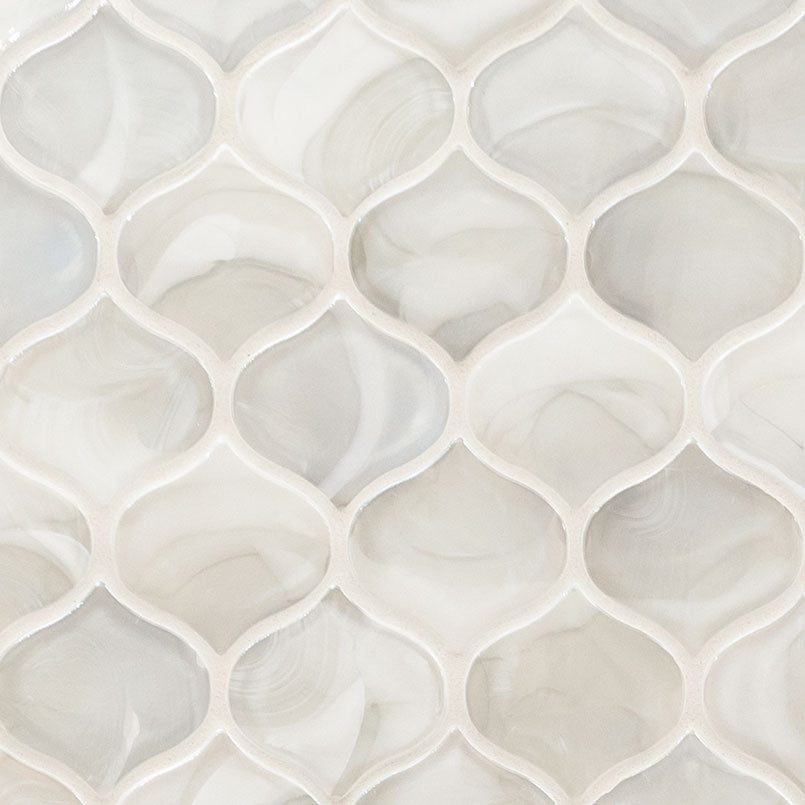
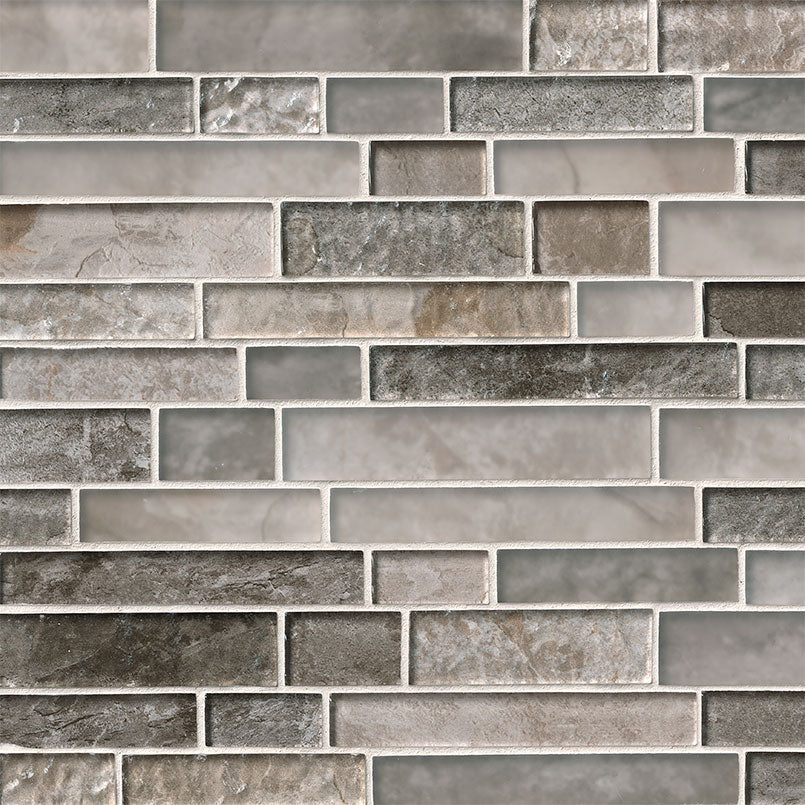
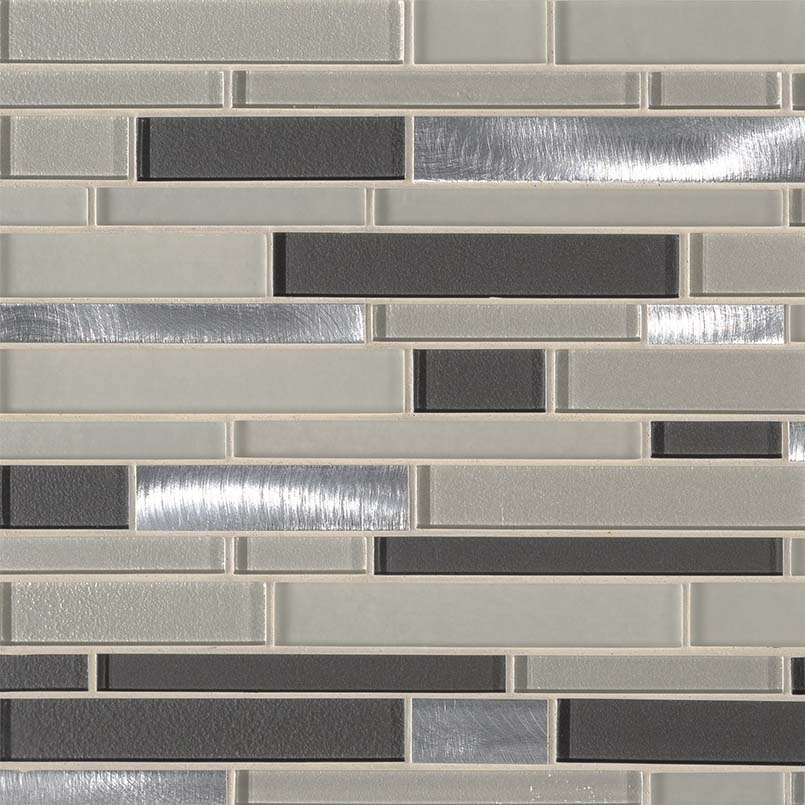
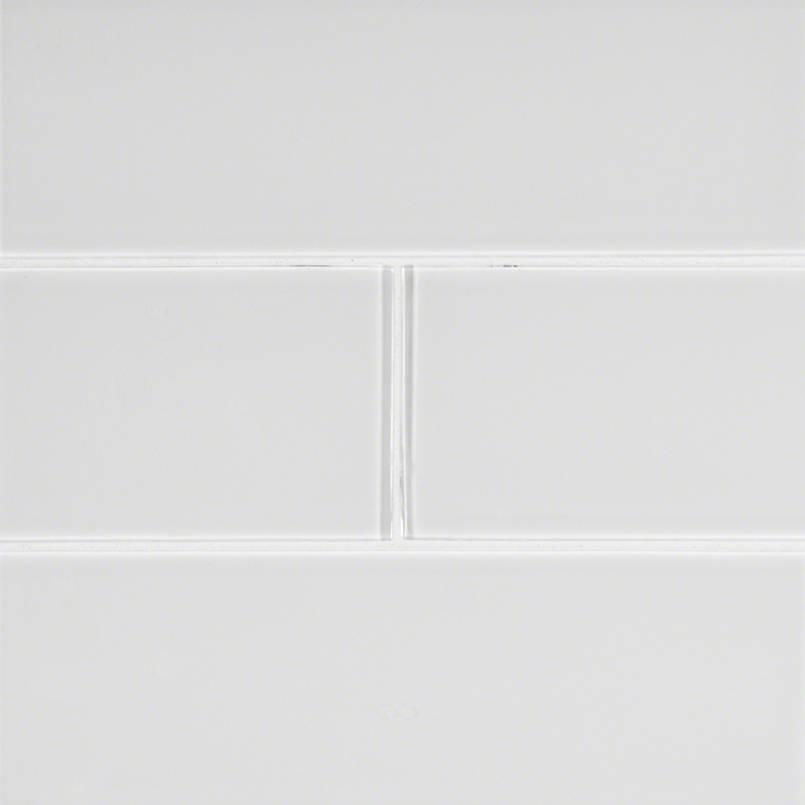
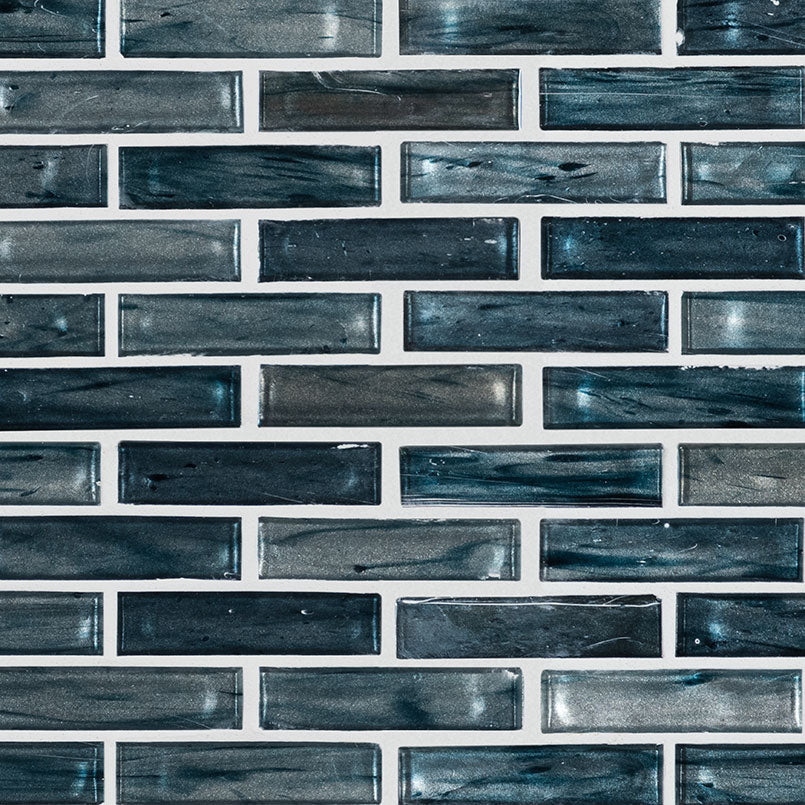
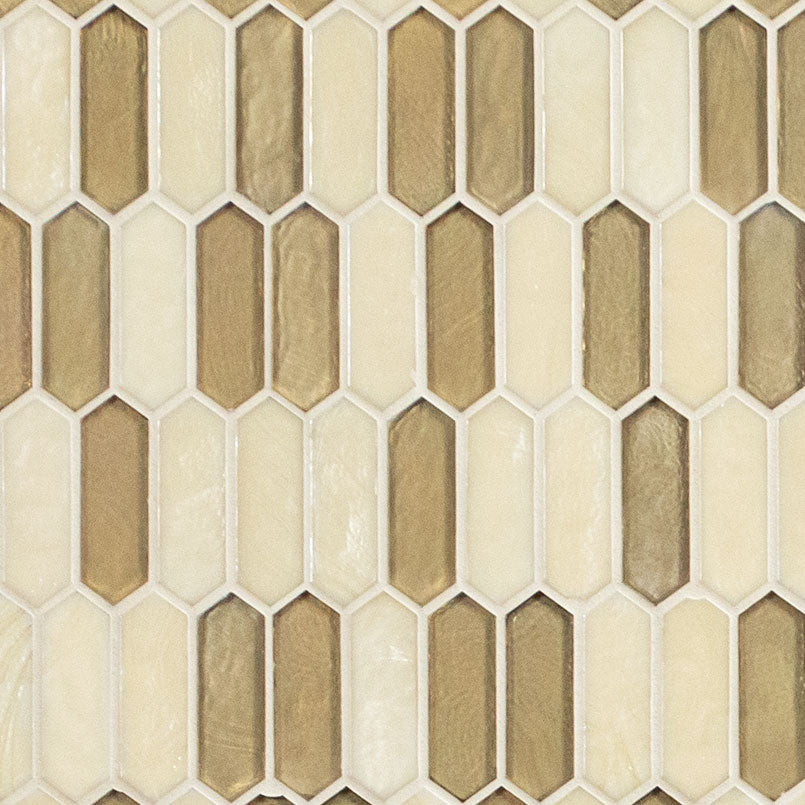
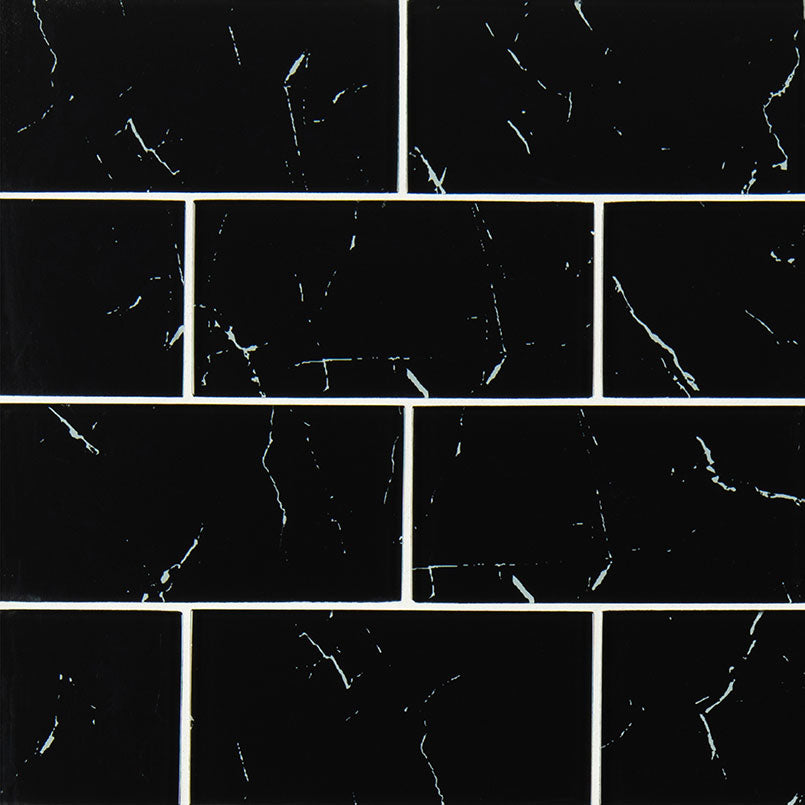
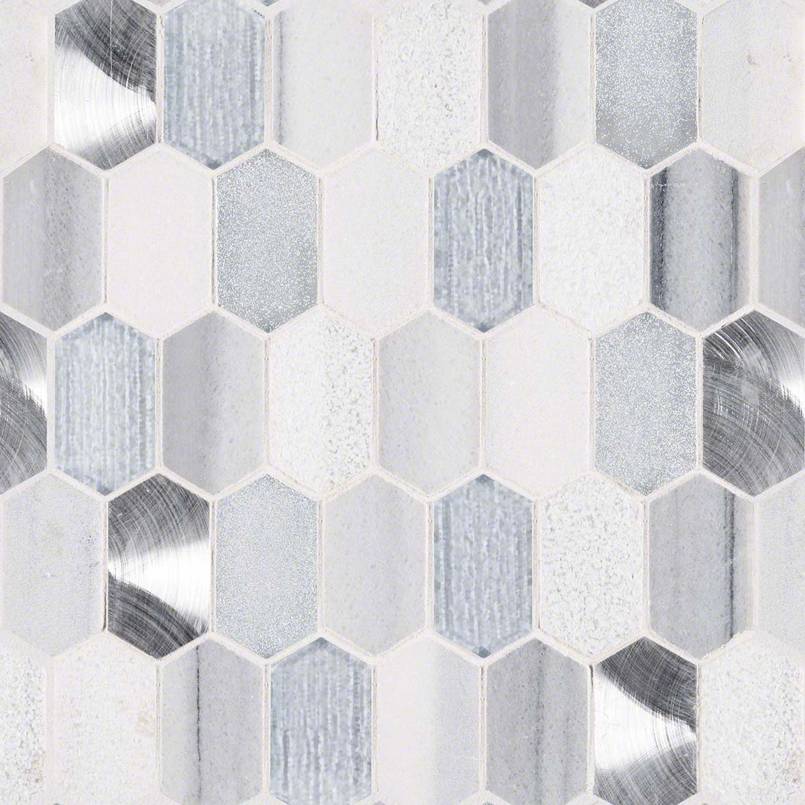
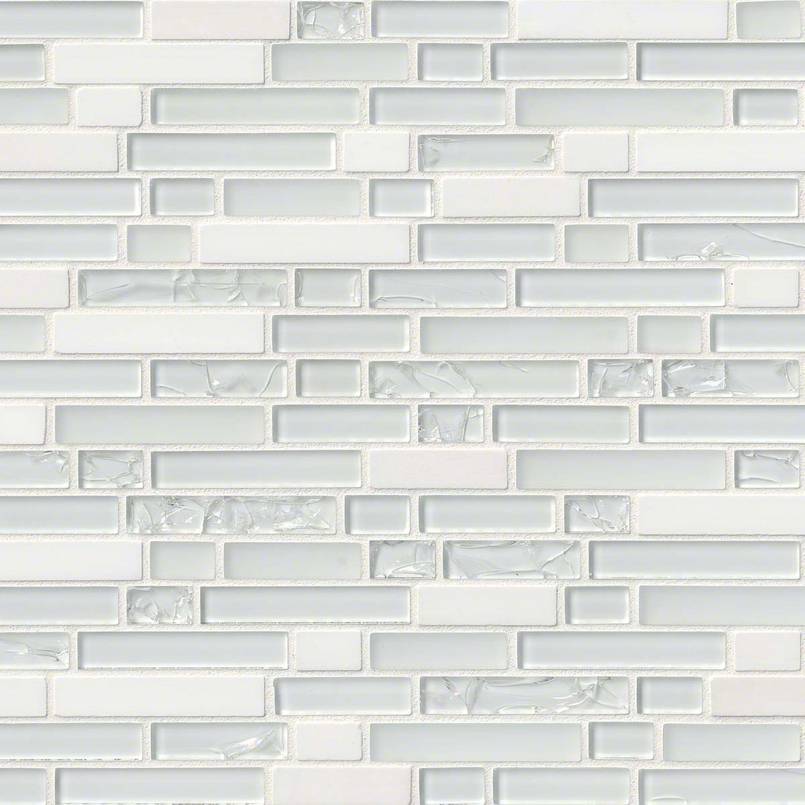
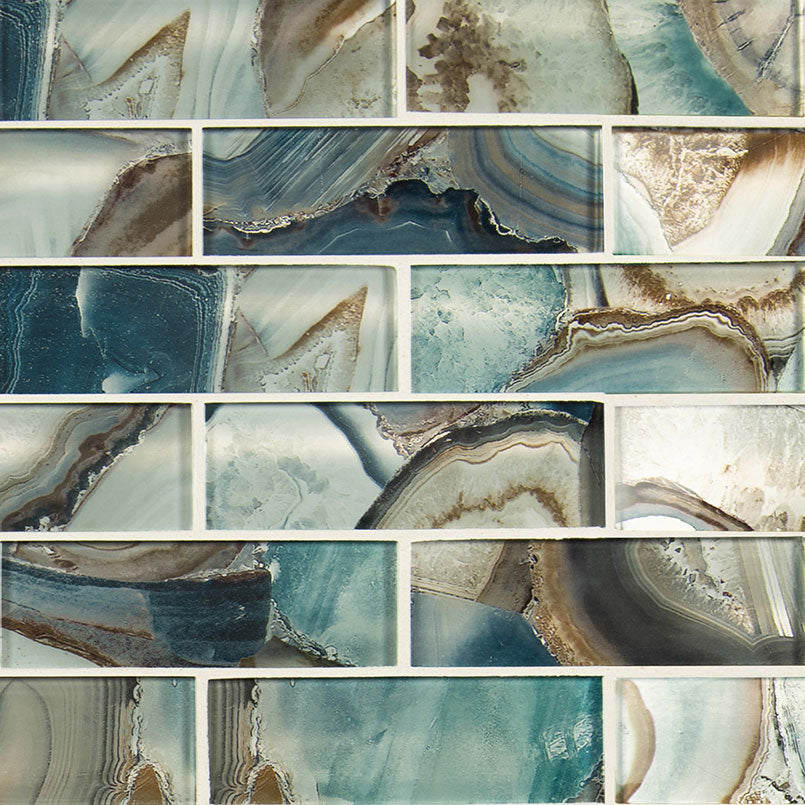
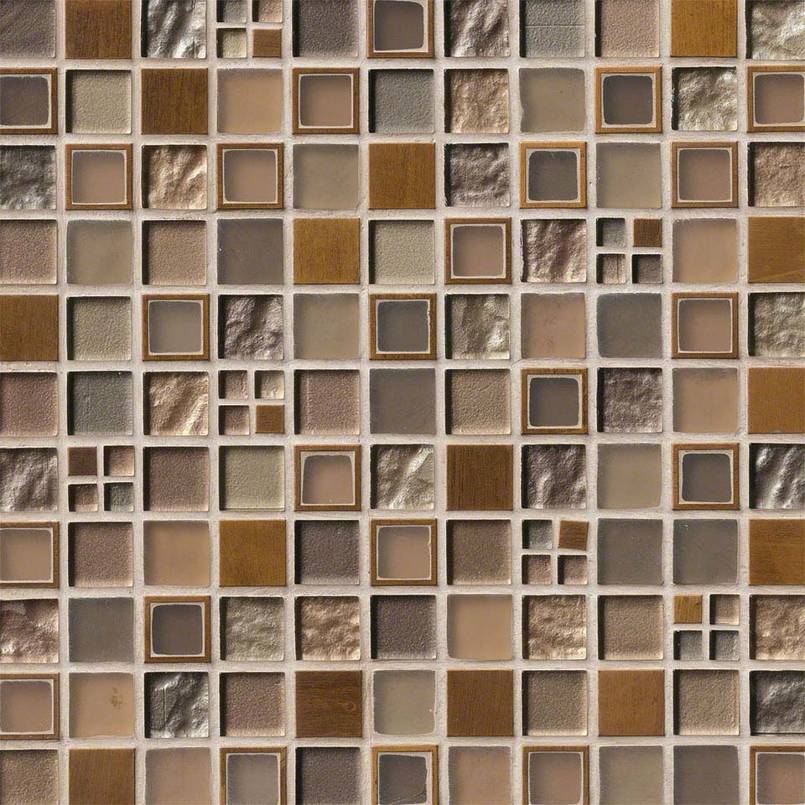
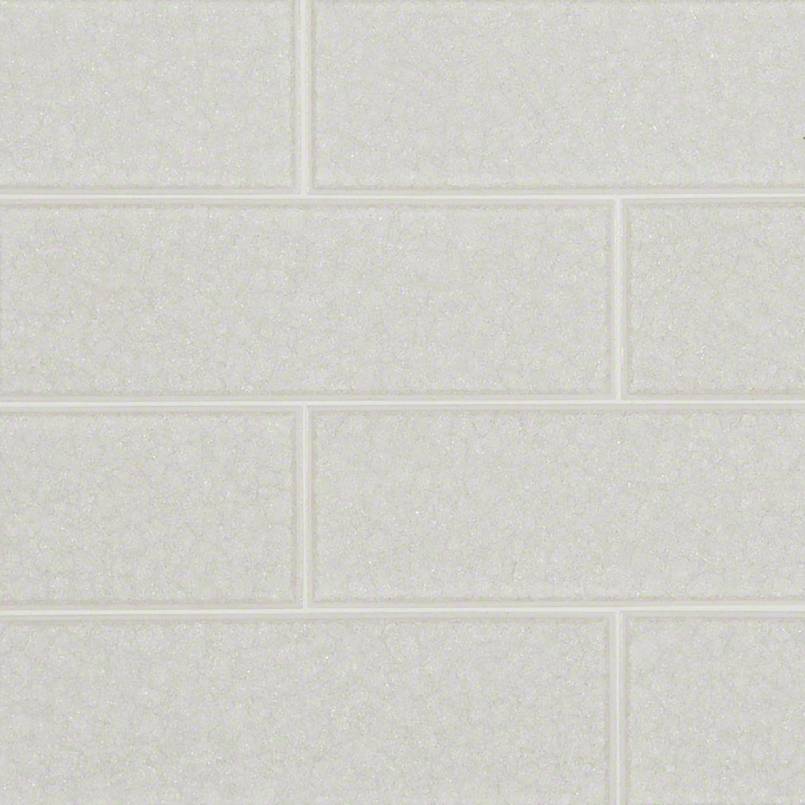
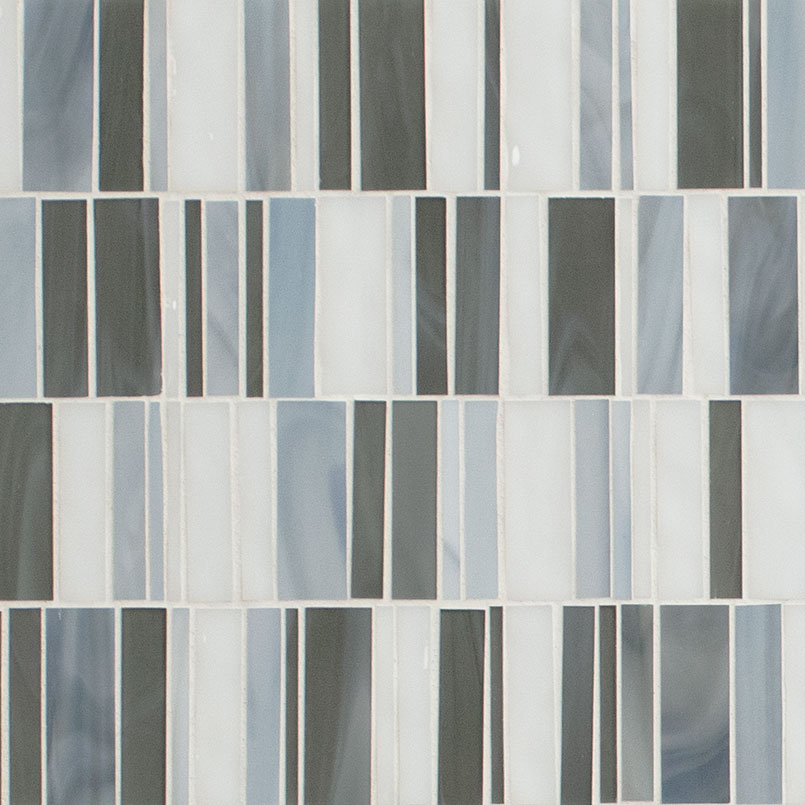
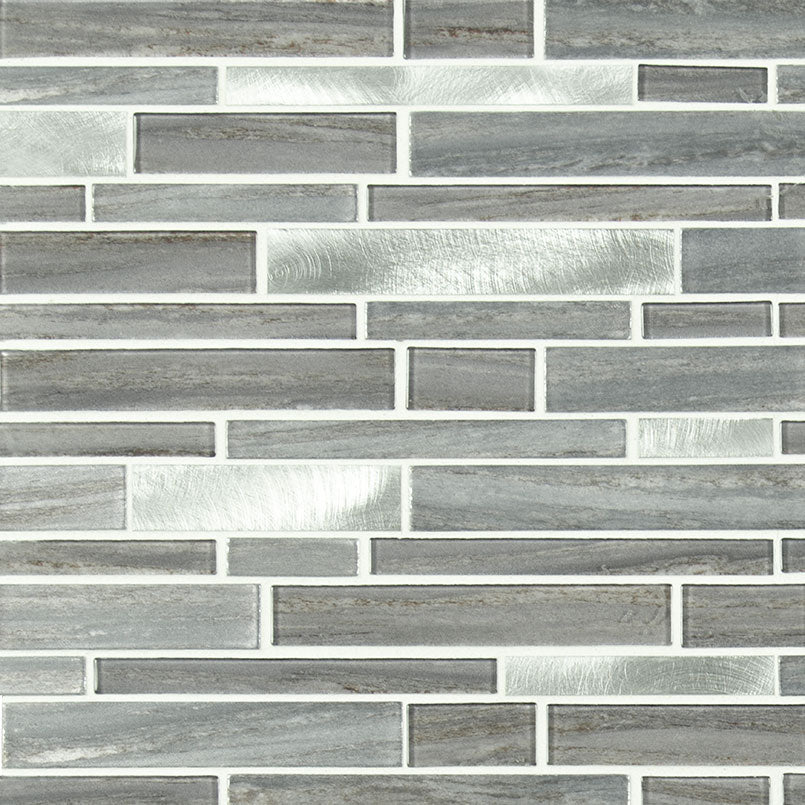
This collection holds 117 glass tiles from MSI, stocked for backsplashes, shower walls, accent walls and feature niches. Everything on this page is glass or a glass blend: 77 tiles are pure glass, and the other 40 combine glass with natural stone, metal, porcelain or ceramic in one sheet.
Glass is the material people choose when they want color that stays clear and a surface that wipes down. It is non-porous, so it does not absorb water, oil or the splatter that lands behind a range. It also reflects light back into the room, which is why it reads well in a galley kitchen, a windowless powder room or a shower that only gets borrowed light.
If you are still choosing a material, compare this page with porcelain tile, ceramic tile, natural stone tile and metal tile, or start from the room: backsplash tile, kitchen tile, bathroom tile and shower tile.
What is in this collection
The 117 tiles break down by format, and several carry more than one format value because a mosaic sheet can also be sold as a wall tile.
| Format | Tiles | What it means |
|---|---|---|
| Mosaic sheet | 59 | Small pieces pre-mounted on a mesh backing, sold by the sheet |
| Wall tile | 71 | Rated for vertical surfaces, including subway and field formats |
| Interlocking pattern | 34 | Sheets with a shaped edge so the seams between sheets disappear |
| Beveled | 7 | Angled edges that catch light along every joint |
| Floor or wall rated | 10 | Approved for horizontal use as well as vertical |
| Peel and stick | 2 | Adhesive-backed sheets for a dry backsplash with no wet saw |
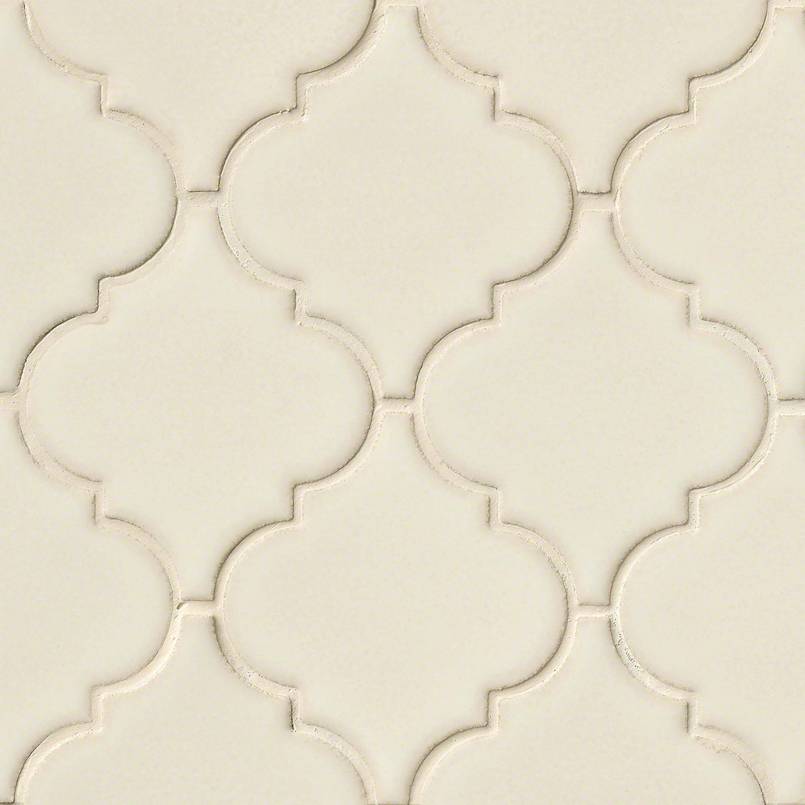
Shapes run from standard rectangles to hexagons, pickets, arabesque and penny round. Rectangles account for 38 tiles, linear strips 29, hexagon and octagon 15, square 4, picket 3, plus one each of arabesque, herringbone, plank, elongated hexagon and round.
Where glass tile works best
Use is listed per tile in our catalog, so you can match the tile to the wall before you order a sample.
| Listed use | Tiles |
|---|---|
| Backsplash | 83 |
| Kitchen | 64 |
| Bathroom | 57 |
| Shower | 54 |
| Wall | 9 |
| Accent wall | 8 |
| Floor or wall | 6 |
| Countertop | 5 |
| Floor | 4 |
| Outdoor | 3 |
| Pool | 2 |
| Fireplace | 1 |
The pattern in that table is the useful part. Glass is a wall material first. A kitchen backsplash, a shower surround, a tub niche or a single accent wall is where most of this collection belongs, and only ten tiles here carry a floor rating.
Kitchen backsplash
Behind a range, glass has a practical edge over unglazed stone: splattered oil sits on the surface instead of soaking in, and there is nothing to seal. A full-height run from counter to upper cabinets reads as one plane because glass has no color variation between pieces the way marble does. If you are weighing a full-height run against a standard 18 inch band, read full-height backsplashes.
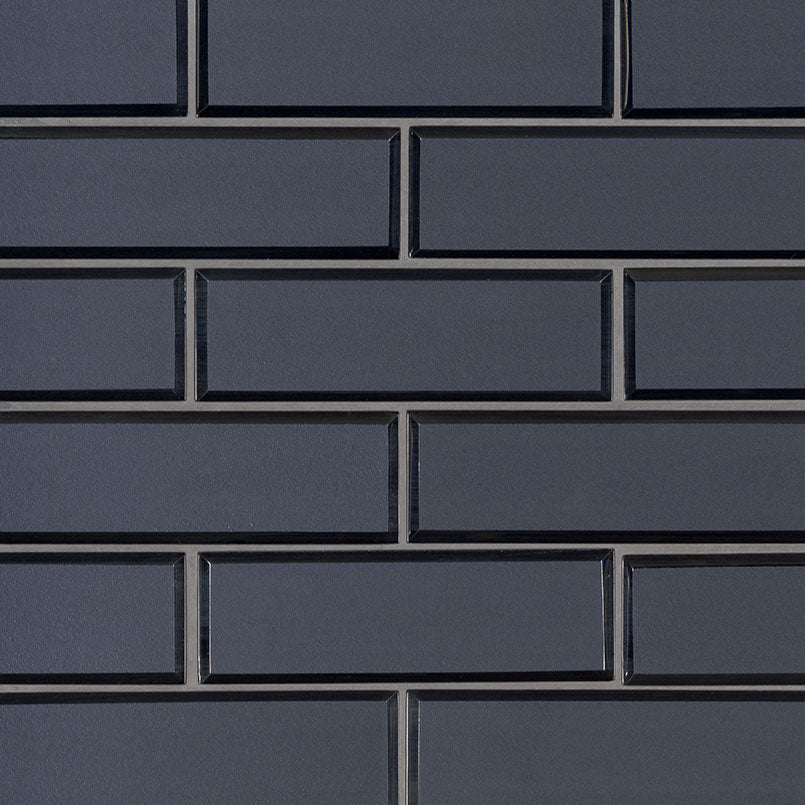
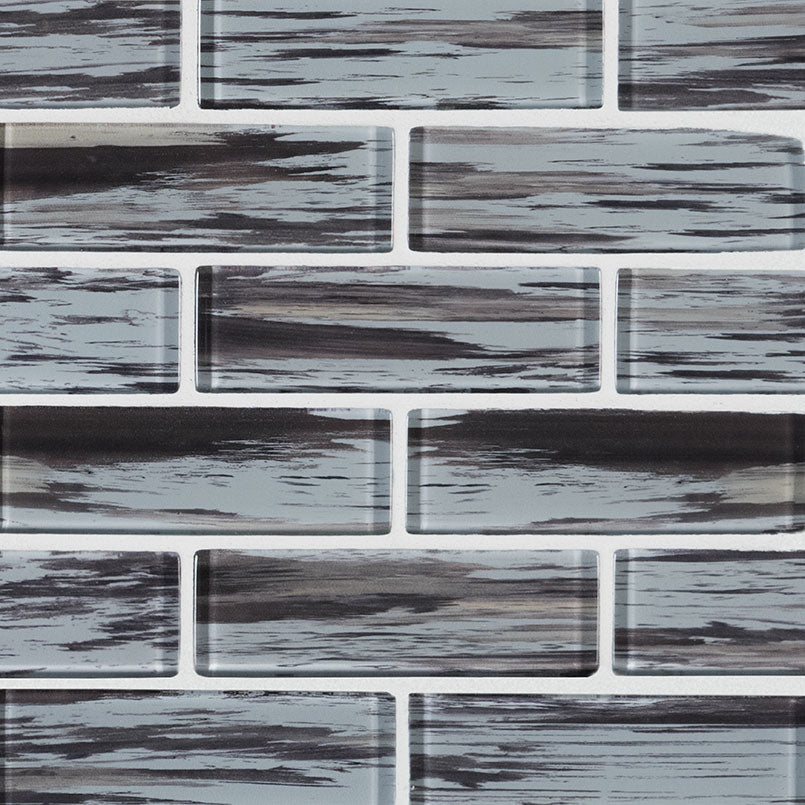
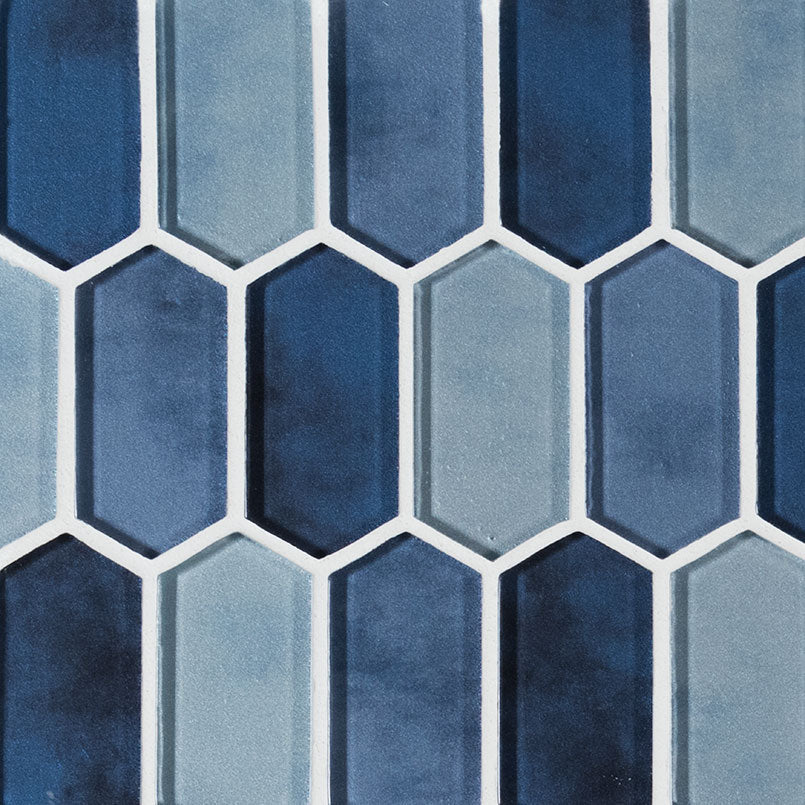
Subway shapes are the safest starting point and there are 22 of them here, including Arctic Ice 2x4 and Blue Shimmer 2x6. For something with more movement, the interlocking patterns tile edge to edge with no visible sheet seam.
Shower and wet areas
54 tiles here are listed for shower use. Glass suits a shower because it does not absorb water and the grout joints in a mosaic sheet add grip underfoot on a shower floor, provided the specific tile is floor rated. Two things decide whether a glass shower works: the substrate has to be flat, because glass shows every dip the way a mirror does, and the waterproofing has to be done properly behind it.
A common layout is a large-format porcelain field with a glass mosaic band or niche. That keeps the glass cost down and puts it where it is seen. Mosaic tile covers the wider set of mosaic options across every material.
Pool, outdoor and fireplace
Three tiles in this collection are listed for outdoor use and two for pool use: Hawaiian Blue and Hawaiian Sky, both 1x1 staggered mosaics. Pool and waterline tile is a different specification from interior wall tile, and in New Jersey and New York an exterior tile also has to survive a freeze and thaw cycle. Check the rating on the individual product page, and see pool tile and outdoor tile for the full outdoor-rated range. One tile here, Savoy 2x6 Subway, is listed for fireplace use; fireplace tile holds the rest.
Glass blends: stone, metal, porcelain
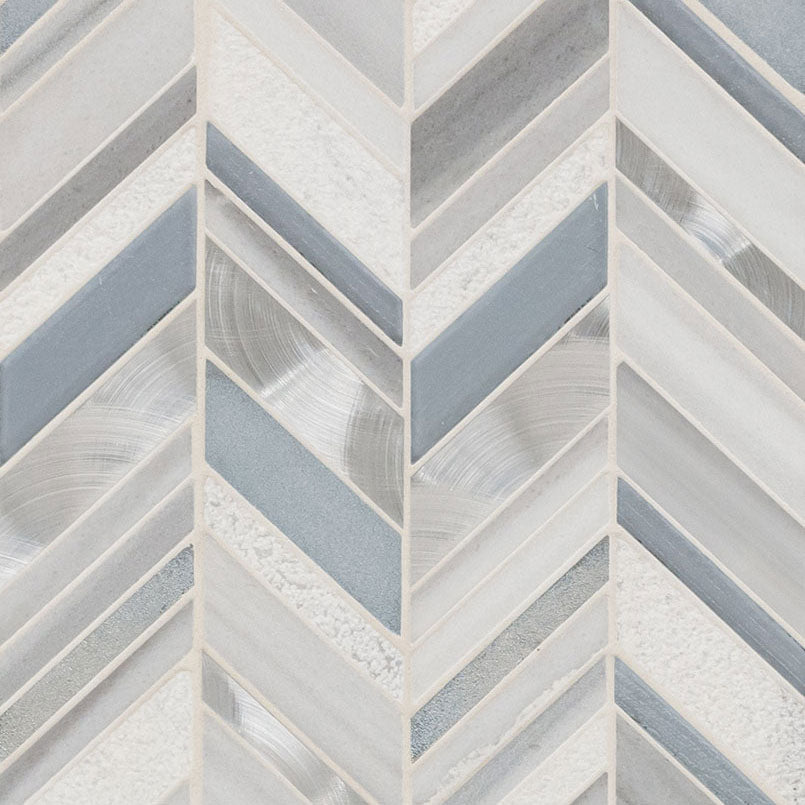
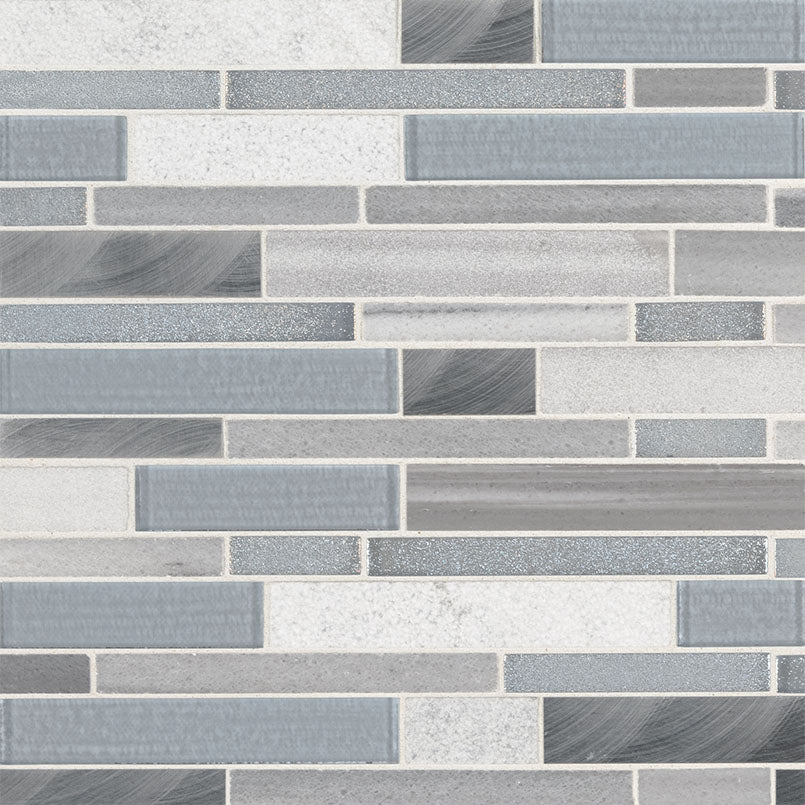
40 of the 117 tiles mix glass with another material on the same sheet. This is how you get stone texture and glass reflection in one piece.
| Blend | Tiles | Reads as |
|---|---|---|
| Glass only | 77 | Clear, even color, maximum light reflection |
| Glass and natural stone | 23 | Matte stone next to glossy glass, more texture |
| Glass, stone and metal | 7 | Three surfaces in one sheet, strongest contrast |
| Glass and metal | 5 | Brushed metal strips between glass pieces |
| Glass and porcelain | 4 | Porcelain body with glass accents |
| Glass and ceramic | 1 | Ceramic body with glass accents |
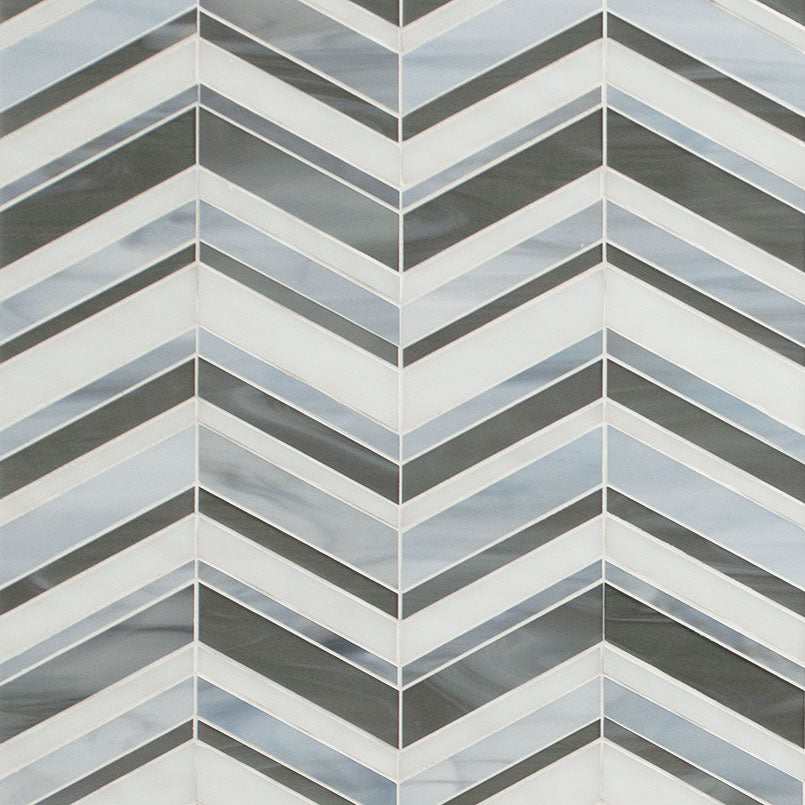
Two examples worth opening: Arctic Storm Interlocking pairs honed grey stone with glass in a linear pattern, and Bytle Bianco Herringbone runs stone, glass and metal through a herringbone layout. One caution on blends: the stone component is porous even though the glass is not, so a blend needs sealing where a pure glass tile does not.
Color and shade
Color is tagged per tile, and many tiles carry two or three because a blend sheet is rarely one color.
| Color | Tiles |
|---|---|
| Gray | 51 |
| White | 33 |
| Blue | 19 |
| Brown | 19 |
| Beige | 17 |
| Cream | 12 |
| Metallic | 8 |
| Silver | 8 |
| Black | 7 |
| Green | 6 |
| Charcoal | 3 |
| Iridescent | 3 |
| Gold, champagne, ocean, pearl, sky blue | 2 each |
| Aqua, sand | 1 each |
Shade variation matters as much as color. 48 tiles are tagged light, 48 medium, 15 dark and 30 high variation. High variation means the sheets differ from each other by design, so order from one batch and dry-lay several sheets before setting them. For a white kitchen, the light-shade tiles here sit next to the white options in subway tile.
Finishes split roughly between multi finish sheets (37), polished and high gloss (24) and beveled (7), with smaller counts of matte, honed, textured, crystallized, shimmer, metallic and iridescent. Gloss bounces light and shows water spots; matte and honed hide both.
Size and thickness
Face sizes in this collection include 2x4, 2x6, 3x6, 3x9, 3x12, 4x12, 2x2, 12x12 and 12x18, plus 1 inch, 2 inch and 3 inch mosaic pieces. Thickness runs from 0.12 inch to 0.38 inch.
| Thickness | Tiles | Typical use |
|---|---|---|
| 0.12 inch | 2 | Thin mosaic sheets |
| 0.16 inch | 15 | Includes both peel and stick tiles |
| 0.24 inch | 42 | Most 6mm mosaic sheets |
| 0.31 inch | 55 | Most 8mm sheets and subway formats |
| 0.38 inch | 3 | Thickest sheets in the collection |
Thickness decides how the tile meets everything around it. A 0.38 inch sheet next to a 0.24 inch sheet leaves a visible step, so keep one thickness per plane or plan a trim piece at the change. Tile edge trim, pencil trim and bullnose trim cover the outside corners and the top edge of a backsplash that stops below a cabinet.
Glass compared with the other backsplash materials
Most people arrive at glass after looking at porcelain, ceramic and stone, so here is the honest comparison on the points that decide the job.
| Material | Sealing | Light | Cutting | Floor use |
|---|---|---|---|---|
| Glass | None needed | Reflects and carries color through the body | Needs a glass-rated blade, chips easily | Only where the tile is rated for it |
| Porcelain | None needed on the glazed face | Matte or gloss glaze, color sits on the surface | Standard wet saw | Common |
| Ceramic | None needed on the glazed face | Softer gloss than glass | Easiest to cut | Wall and light-traffic floors |
| Natural stone | Sealing required | Matte, absorbs light | Standard wet saw | Common |
| Metal | None needed | Directional sheen | Varies by backing | Accent only |
The trade-off is straightforward. Glass gives the cleanest color and the most light with no maintenance, and it costs more labour to install than ceramic because of the cutting and the setting bed. That is why a lot of our customers run glass as an accent band or a single backsplash wall and use porcelain for the larger areas.
Layouts that work with glass
Sheet mosaics are laid out for you, which removes most layout risk. Where a layout decision still matters, it is at the edges. Plan the grid so a cut piece does not land at the most visible corner, start from the center line of the range or the sink rather than from a wall, and decide early where the run stops: under the upper cabinets, at the window line, or all the way to the ceiling.
Interlocking sheets are the easiest to install cleanly because the shaped edge hides the join between sheets. Straight-edge mosaic sheets need the installer to keep the joint between sheets the same width as the joints inside the sheet, or a grid pattern appears across the wall once the grout goes in.
What your installer needs to know
Glass behaves differently from ceramic on three points, and all three are decided before the tile goes up.
- The setting bed shows through. Translucent glass takes on the color of the thinset behind it, so a white glass-rated thinset is standard and a grey one will dull the color. Trowel ridges can also telegraph through, which is why installers flatten the bed rather than leaving combed ridges.
- Cutting needs the right blade. Glass chips under a standard tile blade. A wet saw with a glass-rated continuous rim blade, run slowly, is what keeps the cut edge clean, and cut edges are usually turned into inside corners where trim or caulk covers them.
- Flat substrate, then waterproofing. Gloss glass mirrors the wall behind it, so any dip or bulge in the board shows in the reflection. In a shower, the waterproofing membrane goes on before the tile and is not optional.
Grout choice follows the tile. Narrow joints in a mosaic sheet suit an unsanded grout, since sanded grout can scratch a polished glass face. If you want the work handled end to end, our installation service and design services cover measurement, layout and install.
How much to order
Glass tile is boxed by the sheet, and box counts in this collection are 10 sheets (52 tiles), 15 sheets (43 tiles) and 20 sheets (19 tiles), with a few outliers. Square feet per box is listed on each product page, because a 2x6 subway box and a 1 inch mosaic box do not cover the same area.
Measure the wall in square feet, add for waste, and round up to whole boxes. Waste is higher on glass than on ceramic for two reasons: cuts break more often, and patterned or high variation sheets need extra material to keep the pattern running. Order the full job in one go so every box comes from the same production batch, and keep a spare box for repairs, since a discontinued color cannot be matched later.
See glass tile in person
Glass is the hardest material to judge from a photograph. Reflection, depth and the way a sheet reads under a kitchen light do not come through on a screen, and the same tile looks different under daylight than it does under LED. All four of our showrooms carry tile displays:
- Clifton, NJ showroom
- Newark, NJ tile showroom
- North Bergen, NJ kitchen and bath showroom
- Brooklyn, NY tile and kitchen store
Book a free design consultation to see samples side by side with your cabinet and countertop choices, or use find a location for hours and directions. Glass is usually the last decision in a kitchen, so bring the cabinet door sample and the countertop sample with you.
Glass tile questions we get asked
Can glass tile go on a shower wall?
Yes. 54 tiles in this collection are listed for shower use. Glass does not absorb water, so the deciding factors are the waterproofing behind it and a flat substrate, not the tile.
Can glass tile go on a floor?
Only when the specific tile says so. Ten tiles here carry a floor or floor-and-wall rating, including Champagne Toast Interlocking. Everything else on this page is a wall tile, and glass rated for walls will scratch and crack underfoot.
Does glass tile need a special thinset?
It needs a white, glass-rated thinset. Grey thinset reads through translucent glass and changes the color you chose. This is the single most common reason an installed glass backsplash looks duller than the sample.
What grout should I use with glass tile?
Unsanded grout for narrow joints, because sanded grout can scratch a polished glass face. Grout color also matters more with glass than with ceramic, since the joints form a visible grid across a reflective surface.
Is glass tile a good choice behind a stove?
It is one of the better ones. The surface is non-porous, so cooking oil wipes off and there is nothing to seal. If the sheet is a glass and stone blend, the stone part does need sealing.
Can I install peel and stick glass tile myself?
Two tiles here are adhesive backed, Alpine Ice 2x6 Subway and Denali Frost Interlocking, and both are 0.16 inch. They suit a dry kitchen backsplash on a smooth, clean wall. They are not a substitute for a set tile in a shower or anywhere that gets standing water.
How much extra should I order?
Enough to finish the job plus a spare box. Glass cuts break more often than ceramic cuts, and a high variation sheet needs extra material to keep the pattern reading correctly. Batches change over time, so a later top-up may not match.
Where can I see glass tile near me in New Jersey or Brooklyn?
Our showrooms in Clifton, Newark and North Bergen in New Jersey and in Brooklyn, New York all carry tile displays, and samples can be viewed side by side with cabinets and countertops. Book a free design consultation or see our price match guarantee before you buy elsewhere.
Related tile collections
Browse by look: subway look, pattern look, decorative look, metallic look, stone look, marble look, brick look, herringbone and picket. Browse by place: wall tile, floor tile, mosaic tile, subway tile, 3x12 tile and 12x24 tile. Every MSI line we carry, tile and countertop, sits under MSI tile and countertops.
Planning the rest of the room at the same time? See quartz countertops, bathroom vanities and medicine cabinets, or read 2026 bathroom tile trends, backsplash ideas that sell homes, porcelain versus ceramic tile and the counterplash trend.